AI has accelerated product development. Expansion still happens locally
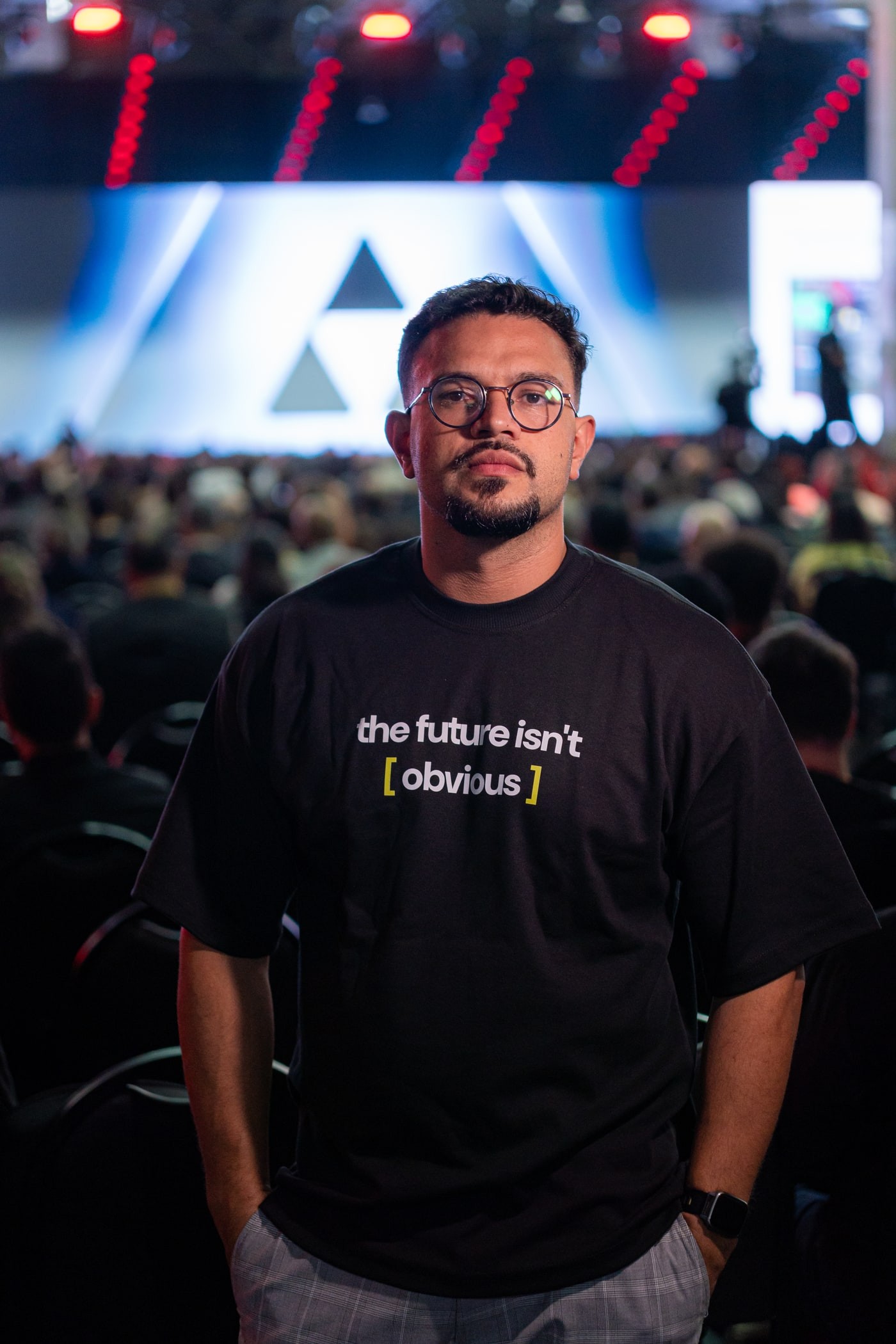
I came to Mexico Tech Week for the first time to spend time with Notion and Agora.io, two NewHack partners and sponsors. A conversation about investing in AI startups prompted a reflection on distribution, trust and the work required to enter another market.
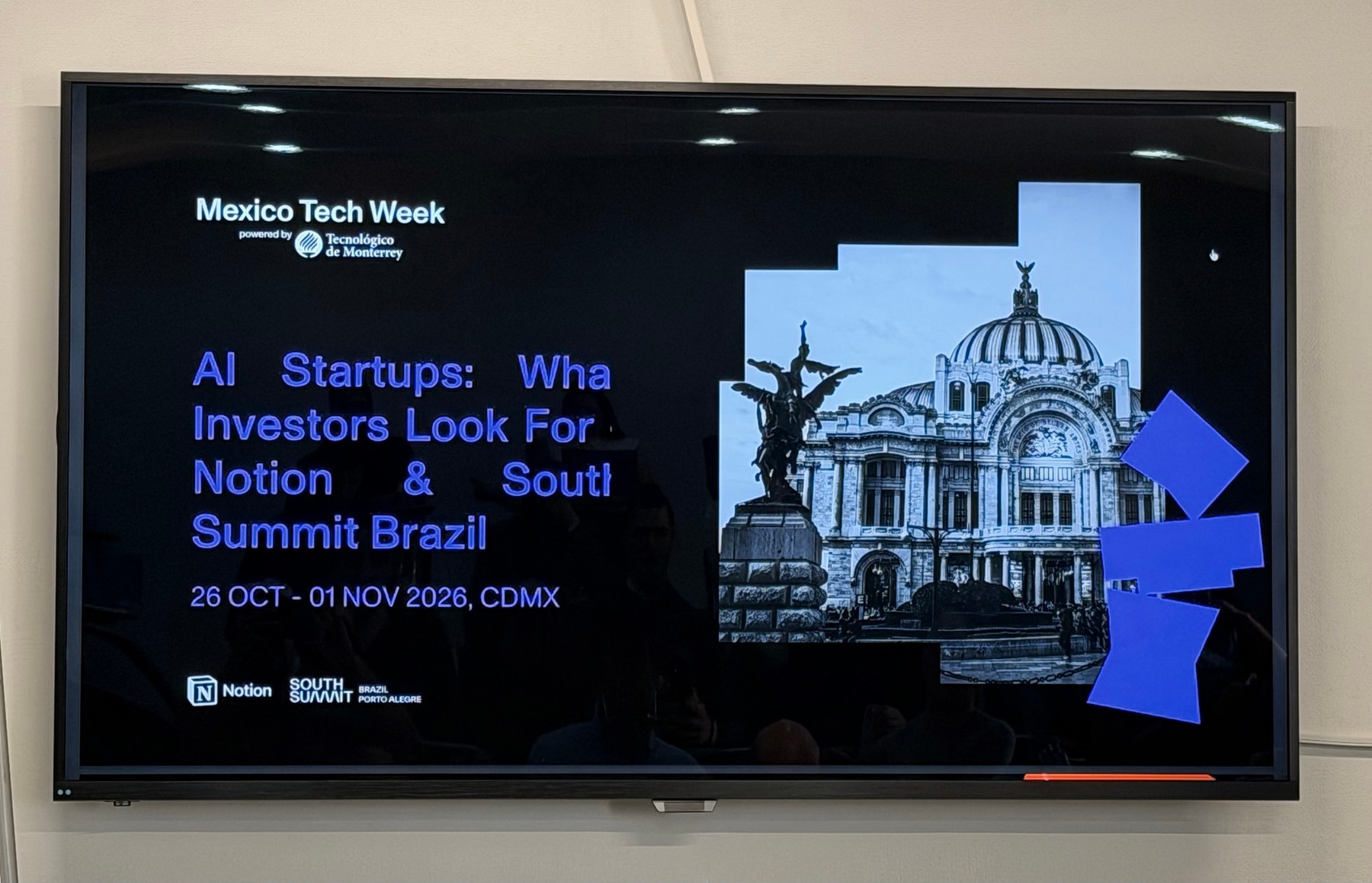
One question stayed with me during the panel: as building software becomes easier, what does a company need to develop for someone to choose to buy from it?
Organized by Notion and South Summit Brazil, the gathering brought together Andrés Baehr, managing partner and investor at Savia, and Sid Sharma, VP of AI Innovation & GTM at Agora, moderated by Esteban Balderas, a Notion Ambassador. The topic was what investors look for in AI startups. The conversation revealed differences of opinion about software, capital and growth, alongside something that particularly interests me: the ability to turn relationships into market knowledge and concrete business opportunities.
Two markets that deserve to know each other better
Being here helps put Mexico's scale into perspective. In the World Bank's 2025 data, the country had approximately 132 million inhabitants, while Brazil had about 213 million. These are two large markets, with room to build companies and learn from problems that cross borders.
That convergence also appears in funding. In the public highlights of its Trends in Tech 2026 report, covering 2025, LAVCA says Mexican startups raised 21% more capital than in the previous year and trailed Brazilian companies by just 14% in total funding.
That smaller gap deserves attention from entrepreneurs in Brazil. Getting to know Mexico's ecosystem can broaden our understanding of customers, business models, investors and distribution. But a country's size is only the starting point. A startup's opportunity depends on which companies have the problem it solves, how much that problem costs and how those companies buy.
Mexico Tech Week itself creates opportunities for these conversations. The 2026 edition runs from October 26 to November 1, with gatherings across Mexico City. As a reference for its scale, the organizers report that the 2025 edition brought together more than 400 events, over 22,000 attendees and people from 72 countries.
This format requires choices. Each gathering brings together a particular slice of the ecosystem. The value of moving through these environments lies in developing a conversation, recognizing a possibility and following up afterward.
Traction needs to answer a business question
In the investment segment I recorded, Andrés placed traction at the center of his assessment of seed-stage companies. He distinguished this stage from pre-seed or angel investment and acknowledged that science-based businesses may require longer development and validation periods.
The distinction matters. A company that needs years of laboratory work cannot be assessed in exactly the same way as a software application that can reach users sooner. At the same time, a good team needs to produce evidence that it is progressing toward a relevant problem.
For people building with AI, this changes the conversation about speed. Launching an application enables earlier learning. The next challenge is understanding what usage reveals: does someone incorporate the solution into their work? Do they return to it? Are they willing to pay? Can the company deliver the result with a sustainable cost structure?
These questions differ from assessing whether a demonstration is impressive. The ability to build needs to meet demand that justifies continuing the business.
Sid connected this discussion to how well a solution fits the customer's context. An application may make economic sense in one country and need a different value proposition in a market with different costs, processes and alternatives. The same technology may face very different competitive conditions depending on the location and problem it seeks to address.
What would a competitor take time to learn?
During the Q&A, a participant described a company already serving enterprise customers and building infrastructure for different applications. The question was how to assess its defensibility when other teams could develop something similar.
The response broadened the meaning of a network. It can include knowing a company's systems, understanding its APIs, having authorized access to the necessary data and knowing how that environment works. The founders' previous experience in a sector can also help them recognize problems that an outside team would still need to discover.
Another Q&A question brought the discussion to execution and the speed of winning customers. Sid connected a network to the ability to open doors and develop commercial conversations. This is an important point: knowing someone can start an introduction, but the advantage needs to show up in the ability to understand demand and move an opportunity forward.
To assess this part of the business, it is worth examining the path to the customer. How does the team reach buyers? Does an introduction lead to a conversation about a concrete problem? Does learning from the first sales help improve the next ones? These questions make networking a more useful discussion for founders who need to build a consistent way to reach the market and sell.
This distinction helps assess what sits behind an application. Reproducing an interface is one part of the work. To serve the same customer, a competitor may need to understand process exceptions, integrate legacy systems, obtain the necessary permissions and demonstrate that the solution keeps working when something unexpected happens.
My reading is that it is worth examining how much of that learning stays inside the company and can be applied to the next customer. If every deployment requires starting from scratch, the team may be building a service that is hard to scale. If earlier experiences improve the product, shorten integrations and make delivery more reliable, the company is accumulating capability.
For founders, one way to deepen this analysis is to ask what a competitor would need to rebuild to deliver the same result. Then assess how their own company reduces the effort required to serve the next customer. The answers help distinguish the ease of reproducing a demonstration from the difficulty of sustaining an operation.
Not every opportunity needs to follow the venture capital path
Another important segment concerned the kind of company each founder wants to build. Andrés suggested assessing whether a business really needs venture capital before starting to fundraise. Funding needs depend on the development required, the intended growth rate and the business model.
AI expands the possibilities for bringing products to market with small teams. This can enable businesses that grow with their own resources or with a funding structure different from that of a startup preparing for successive investment rounds.
For me, the useful question is what the capital needs to finance. Technical development? Distribution? An operation that requires investment before generating revenue? The answer helps organize ambition and clarify the growth commitment the founder is making.
The question of fundraising stages returned in the Q&A. The response highlighted the expectation that a venture-backed company should be able to sustain new growth milestones and a path to investor returns. This helps explain why the discussion of differentiation changes with the kind of company being built. An advantage sufficient to sustain a profitable business may need further development to support the scale and returns sought by a fund.
There was also a provocative discussion about how easily software can be replicated. Sid was highly critical of the possibility of building a new company simply by offering a better version of an established product. Toward the end, he qualified his position and pointed to opportunities in real problems and tasks that deserve to be redesigned.
Andrés also discussed applications in areas such as energy and fire prevention. My reading of the conversation is that differentiation becomes a deeper discussion when it reaches the customer's work: data, operational integration, understanding the problem, reliability and the ability to deliver a result consistently.
Entering another country means learning how the customer buys
International expansion requires this learning in a new context. Making a product available in another language is one step. Understanding who has the problem, who approves the purchase, which systems need to be integrated and how the customer assesses the result requires contact with local operations.
A partner who knows the market can help select initial accounts, interpret objections and prepare a test that answers a relevant question for the buyer. This work becomes more useful when the introduction produces learning: what needs to change in the offer, which integrations are essential and what conditions enable progress.
Sid offered an example by mentioning Agora's partnership with NewHack to develop the Brazilian market, with opportunities and proofs of concept underway. During the Q&A, he cited my network in Brazil's ecosystem as something that takes time to build and can help open commercial conversations. For founders planning to expand, the lesson is to assess how a partner's knowledge and relationships help test the offer with customers in that market.
For those evaluating expansion, it is worth defining what the first conversations and proofs of concept need to clarify. Who supports deployment? How will the result be measured? What decision will the customer be able to make at the end of the test? An introduction gains value when it helps answer these questions and decide where to keep investing time and resources.
The bridge between Brazil and Mexico starts with a willingness to learn
The experience also reinforces a view I have been discussing: as building applications becomes more accessible, distribution and community become more relevant to building a business. This includes producing useful knowledge, creating connections and staying close to people who need to solve a problem.
A community allows questions to surface before becoming a project, helps people find a reference and enables a solution to be tested with more context. These connections need to be cultivated over time. Attending an event can be the start of that work.
For Brazilian entrepreneurs looking at Mexico, and Mexican entrepreneurs looking at Brazil, I see value in starting with specific questions. Who is the buyer? How do they solve this problem today? What needs to change in the product? Who understands this context and can help test the first hypotheses?
This first participation in Mexico Tech Week is deepening my interest in that connection. Brazil and Mexico have the scale to support significant companies and experiences to share. Turning that possibility into business requires a willingness to understand the other market on its own terms.
AI shortens the time between an idea and a first version. Building trust, learning how a customer decides and developing a commercial relationship remain work that happens between people. This is an important part of the work of building companies.