When the company grows faster than its founder
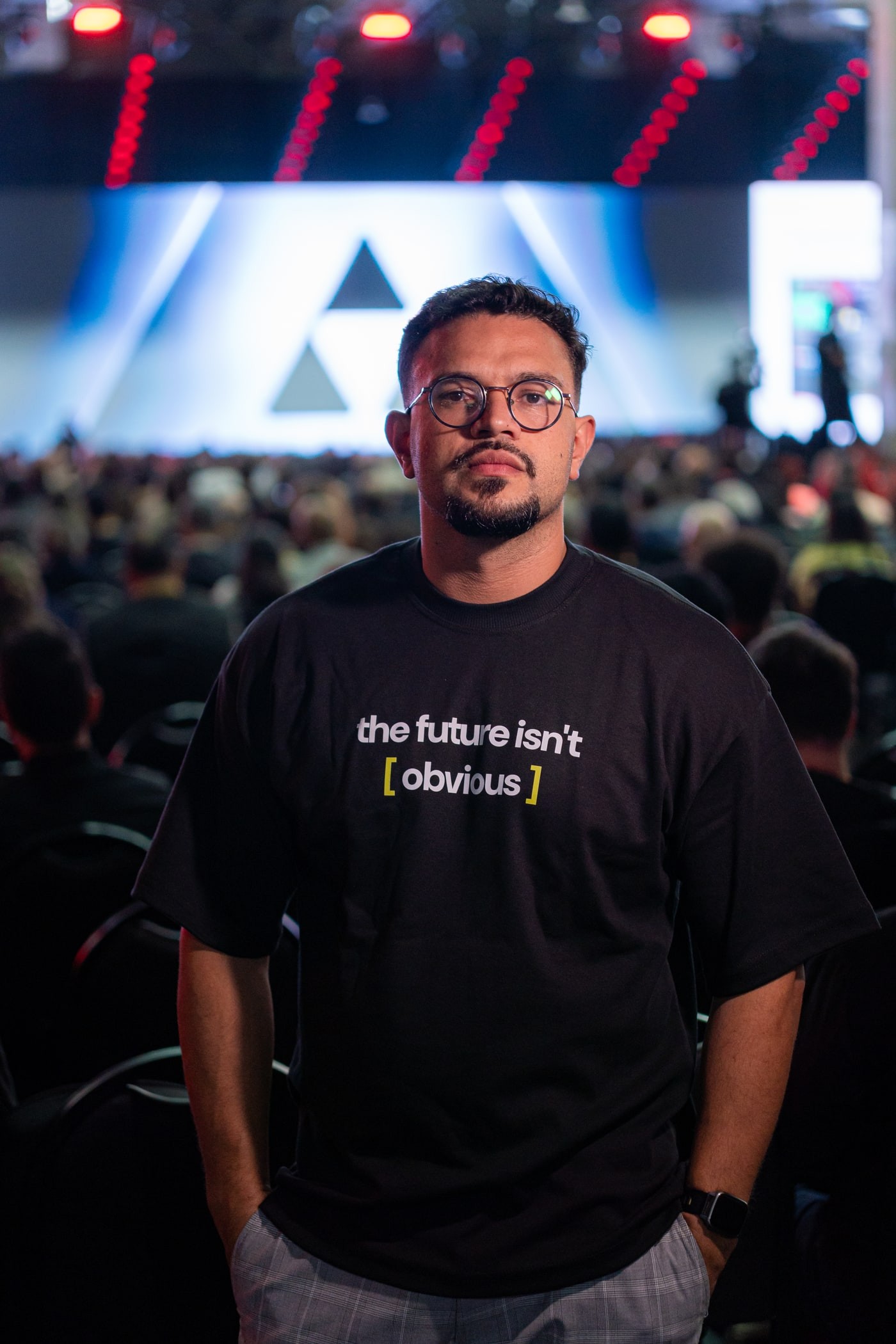
The stories shared at Day1 Endeavor help us understand what happens between the ambition to build a company and the ability to sustain its growth.

One of the hardest things to notice as a company grows is that its founder also needs to change roles, broaden their experience and, often, change their behavior.
The company wins customers. The team expands. Bigger opportunities appear. From the outside, everything seems to be going well. Inside, decisions that once fit into a conversation begin to require processes, leaders and knowledge that the partners are still learning to develop.
I experienced some of this at Rocketseat. Growth brought the need to structure management, develop leaders and make explicit what had previously depended heavily on the founders' instincts. That was the context in which we joined Endeavor's Scale-Up program and sought mentoring to better handle the company we were building.
That experience came back to me as I listened to the Day1 stories. The event returned to Sala São Paulo after seven years, bringing together stories from LiveMode, Insider, RD Saúde, Pismo, VTEX and Bernardinho. Very different businesses and careers, with difficult decisions that changed as each progressed.
For me, one question runs through these stories: what do we need to learn, reorganize or stop doing in order to keep growing?
Growth changes the nature of the problem
At the beginning of a company, proximity solves many problems. The founder knows every customer, follows the product, sells, hires and tries to clear whatever obstacles appear. That ability to make things happen is an important advantage.
As the business grows, so does the number of decisions that need to happen simultaneously. The team needs to understand priorities, take responsibility and work without expecting every answer to come from the partners.
At Rocketseat, I gradually learned the scale of that change. Developing people, assessing performance and preparing leaders required a different kind of dedication from what had helped us win our first opportunities. Seeking support was part of taking on that responsibility.
This is one reason Bernardinho's remarks resonate so strongly with business management. Maintaining a team capable of delivering requires continuous attention to performance, values and relationships. Previous achievements change expectations, but the commitment to learning needs to continue.
A founder can become highly competent for one stage of a business and still need to develop skills for the next. Recognizing this early creates room to prepare the company and yourself before complexity increases.
Selling more also means learning to sustain the operation
Antônio Carlos Pipponzi's account brought a concrete dimension to this discussion. According to him, computerization helped reduce inventory coverage from 120 to 60 days. At a later stage, commercial automation brought that figure down to 30 days.
These figures show a change that goes beyond modernizing an operation. Resources previously tied up in inventory could support other business needs. Technology was connected to the ability to grow.
Later, Pipponzi acknowledged difficulties during a period of expansion that put pressure on liquidity. A company can have opportunities, customers and an ambitious plan while its financial structure comes under increasing strain.
That passage reminded me of Shawee. I have publicly shared that we sold some of the biggest projects in our history while lacking the cash to pay salaries or suppliers. I still had much to learn about financial planning. Sales volume alone did not solve the company's operational needs.
Entrepreneurs need to examine this relationship carefully. Growth may require hiring before collecting payment, expanding delivery, holding inventory or waiting longer for a customer to pay. Each model has its own dynamics. Understanding them helps assess how much growth an operation can sustain and what conditions need to be built to move forward.
Ambition and execution capacity need to evolve together. That involves money, but also people, processes and time.
The market keeps changing after we find an answer
Sérgio Lopes and Edgar Diniz placed CazéTV's apparent success after roughly 20 years of work. Their journey involved different companies, crises, distribution challenges and experiments with how to broadcast sports.
What interests me in this journey is the development of the ability to recognize and seize an opportunity. When a new possibility appears, each entrepreneur approaches it with the experience, relationships and experiments they have accumulated.
There is also a willingness to rethink the model. The way they delivered value to the audience changed throughout the story they told. Maintaining an interest in sports and their audience went hand in hand with transforming formats, channels and businesses.
Carol Matsuse and Yuri Gricheno brought another expression of this challenge. At Insider, the pandemic changed the context in which an important company product was used. Their response involved examining resources they already had, changing communication and developing new offerings.
They also spoke about incorporating perspectives from customers, suppliers and new team members. That requires an openness that can be difficult for people who know their own company deeply. Sometimes accumulated knowledge helps us see the next step. At other times, it makes us insist on an answer the market has already begun to question.
I consider this reflection especially relevant for people building technology. The customer is still trying to solve a problem while other ways to address it emerge. The company needs to follow that change and decide where it can offer more value.
The partnership between founders also needs to mature
Pismo's story put relationships between founders at the center of decisions we often see only through their financial outcomes.
The company announced a US$108 million Series B in 2021. In 2023, Visa announced an agreement to acquire it for US$1 billion in cash, with completion in January 2024. These are important milestones for a technology company founded in Brazil.
Listening to Daniela and Juliana Binatti, however, reveals the work that preceded those milestones: explaining a complex proposition, navigating rejection, earning credibility and making decisions with people who have different temperaments.
A partnership needs to be able to discuss risk, timelines, money and ambition. As the company changes, these discussions take on new consequences. Accepting an investment, rejecting an offer or evaluating an acquisition can affect each partner's life and expectations differently.
That is why building alignment requires more than agreeing on the initial idea. It requires creating conditions to handle disagreement, understand what each person wants and continue making decisions together.
This dimension also appeared in the complementary strengths described by Insider and LiveMode. Different people can expand a company's capabilities when they manage to turn their differences into shared work.
A network broadens what we can see
An important part of a network's value lies in the opportunity to talk to someone who has faced a similar problem but arrived at it by a different route.
A healthcare entrepreneur can learn about distribution from a software company. A technology founder can find a useful discussion about working capital in retail. A coach can help a manager think about performance and culture.
This helps explain why the Day1 stories work together. Each offers a perspective on decisions that recur under different conditions. The listener's task is to understand the context and identify what might make sense for their own company.
Throughout my career, I have learned to value a support network of entrepreneurs from different fields and levels of experience. Talking with someone more experienced can help frame a problem better, see an alternative or recognize a limitation we had not yet put on the table.
It is something I experienced at Scale-Up, and it reinforces my admiration for Endeavor's work and impact globally. One person's experience contributes to the development of others. When those people also share what they learn, knowledge keeps circulating.
Today, NewHack is an Endeavor partner in this initiative. This relationship connects with what we seek to build: environments where entrepreneurs can broaden their experience, build relationships and discuss decisions in greater depth.
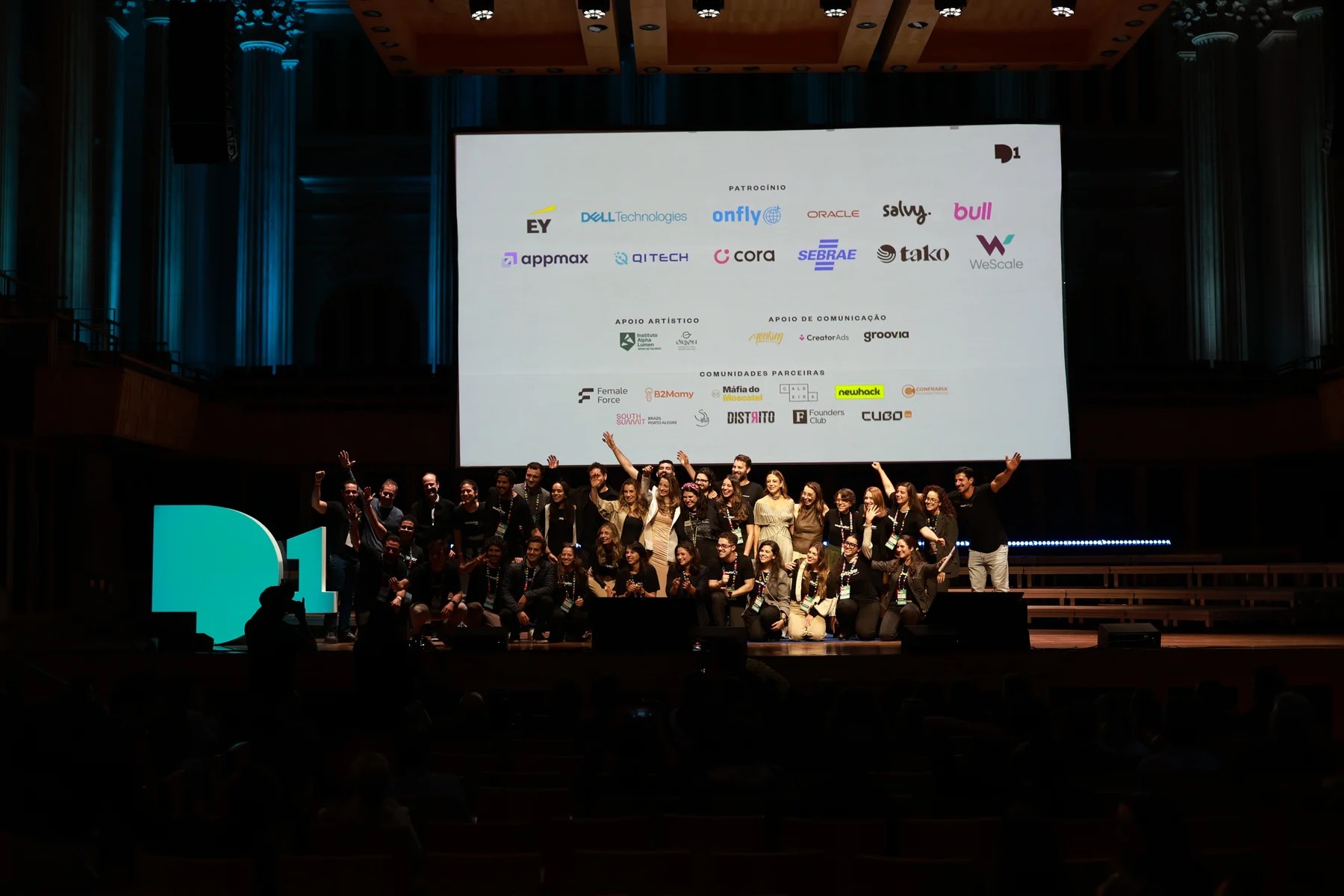
The reach of this work also appears in the global ambition Mariano Gomide de Faria brought to the event. His account of VTEX connects technical capability, customer trust and a contribution to how Brazilian engineering is perceived. One journey can expand the horizons of those who follow, including the size of company they consider it possible to build from Brazil.
What we take from a success story
It is worth listening to these accounts while remembering that we know the outcome. For much of the journey, the people making decisions did not yet know what would happen. Companies that went far also made choices that, in other contexts, could have produced different results.
Learning requires examining those conditions. What did that company already know? Whom could it count on? What risk did it take? What changed to make the decision sensible?
For people building now, these questions can be more useful than trying to reproduce an entire journey. They help us return to our own business and identify what needs attention: a founder's skill, a conversation between partners, the development of a leader or financial dynamics that are still poorly understood.
It is in this passage from story to decision that I see Day1's strength. Ambition becomes consequential when we can recognize the work needed to sustain it.
And that includes continuing to learn how to lead the company we want to build.