Who supports talent before and after recognition?
KondZilla and Kaique Alves spoke about education and building a business. Bruninho shared what he has learned about staying in sport, dealing with pressure and preparing for a new chapter. The conversations bring ambition and education together while preserving the differences between their paths.
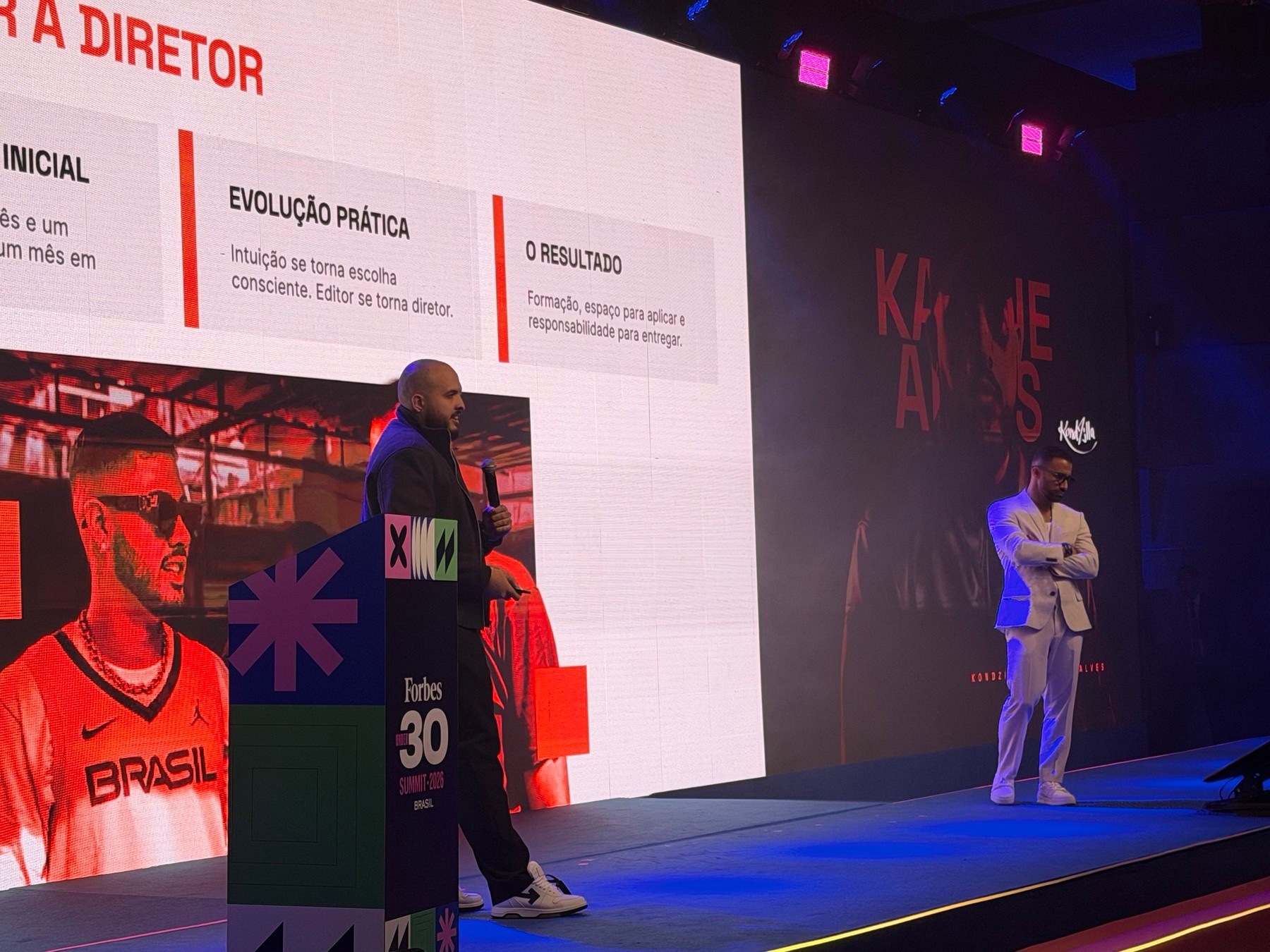
KondZilla said it took him some time to understand the economics of the company he was building. They presented themselves as a music video production company, but revenue came from distributing audiovisual content, and the product circulating within each video was the music. That shift in understanding helps explain a story that he and Kaique Alves framed around education on stage.
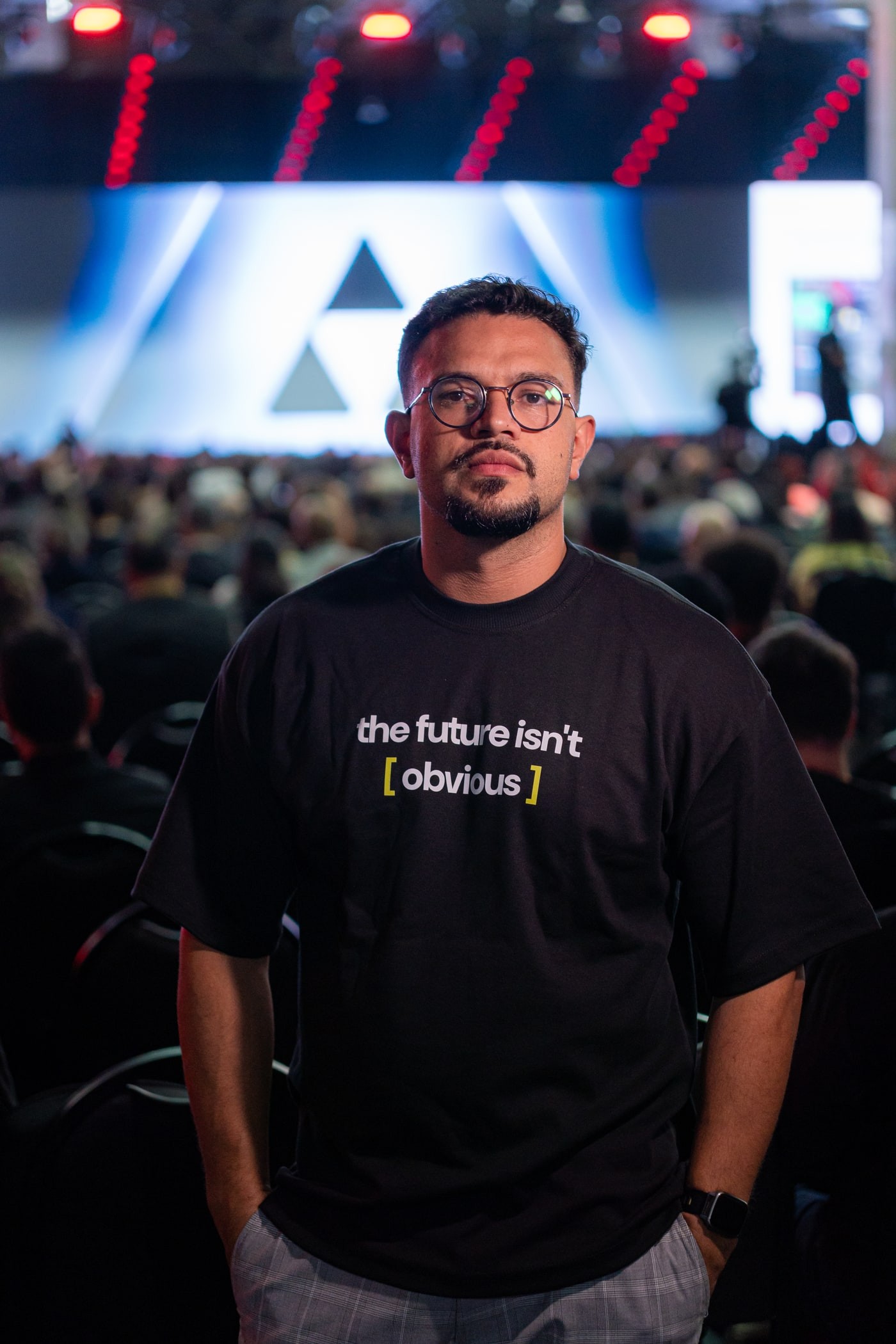
I was named to Forbes Under 30 in 2021, in the Technology and Innovation category. I was happy to attend the first Brazilian edition of the Summit, on October 29 in São Paulo, and hear conversations that offer a view of the work behind the achievements being recognized.
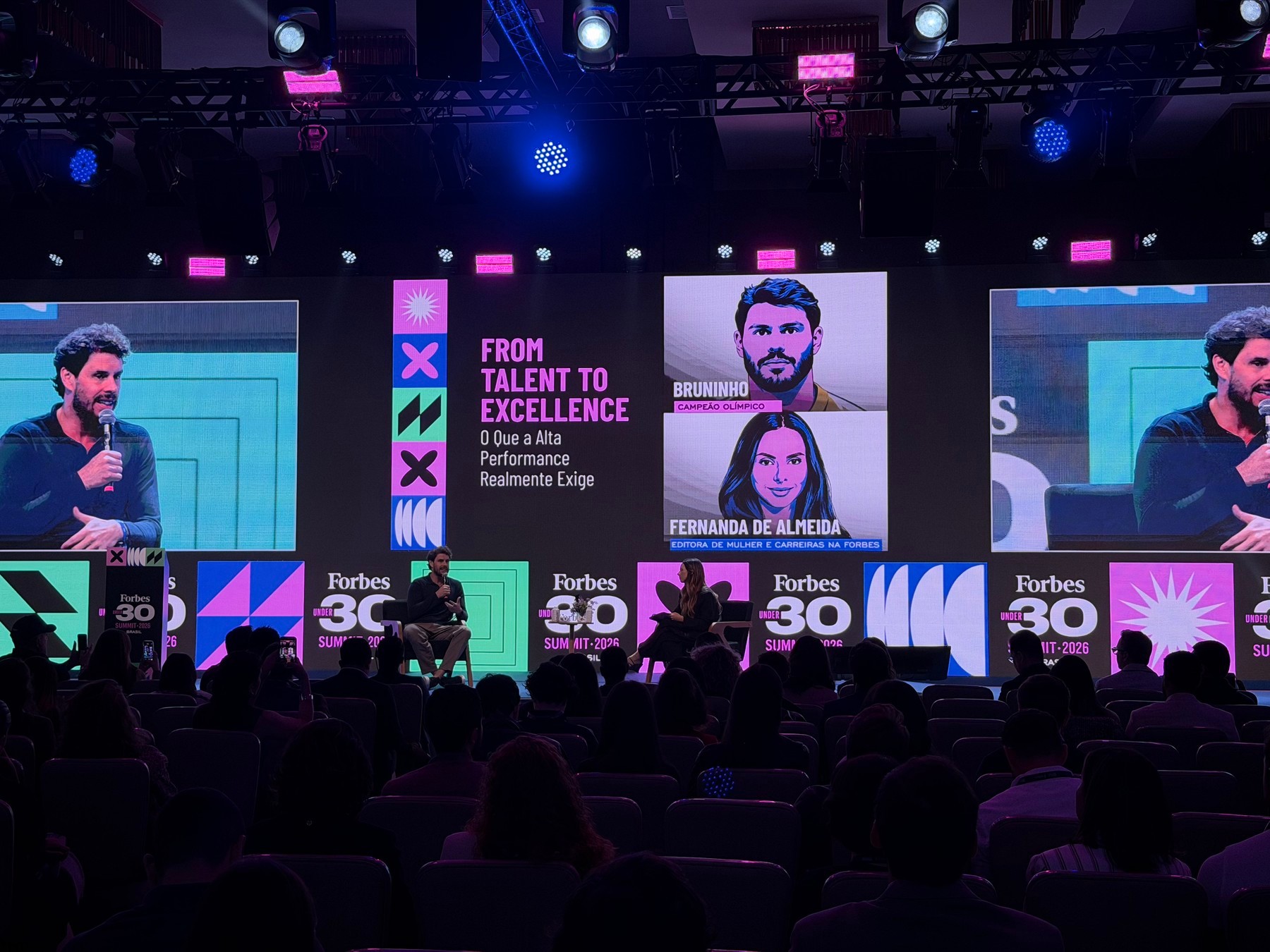
The presentations by KondZilla and Kaique in What Does It Take?, and by Bruninho in his From Talent to Excellence conversation with Fernanda Almeida, led me to think about the conditions that allow an ability to develop. Learning, finding someone willing to invest and being able to keep working involve personal choices, but also the way organizations operate.
Education needs a place to be put into practice
KondZilla grew up close to education. His mother was a teacher, as were his aunts, and he was able to attend a private school because she worked there. After his mother died, he decided to use money from her life insurance to study computer graphics. In the presentation, funk emerged as a way to apply that knowledge and turn it into professional work.
Kaique came to audiovisual work through a different experience. He said he began teaching himself editing through videos, articles and references, and found demand for his first projects among artists around him. By the time he joined KondZilla, he was already producing and selling his work. His desire to study filmmaking in Los Angeles came with initiative, but he still needed the support to move forward.
One of the company’s first steps was to provide him with an English teacher. His training began before the trip and the filmmaking course. Later, when Kaique had saved enough to study for a short period, the company offered to fund his studies.
The company invested in someone who was already delivering work and needed to develop a skill that came before the filmmaking course: English. There was study and room to take on new responsibilities. That is the combination that interests me: what a person learns needs a place in the company’s projects and decisions.
Investing in someone takes time and involves uncertainty. People who receive training still need opportunities to deliver and feedback to recognize where they are going wrong. For an organization, learning becomes a shared capability when it can circulate and improve other people’s work. At the same time, a person’s career does not belong to the company: becoming better also expands the choices available to the person who has learned.
Understanding the product changes where investment goes
KondZilla’s reading of music and distribution extends that relationship. Improving video production was part of the work. Understanding how music circulated and how that circulation generated revenue created room to decide where to develop new skills.
In their account, music videos, advertising, drama and rights management became connected. A song could find other avenues within an audiovisual project. Experience with an audience could help shape a project for a brand. Training someone on the team could make it possible to move into a new area of production.
My reading is that these connections make investing in people a decision about the future of the business. Developing a director or someone capable of leading a production expands the range of work a company can take on. At the same time, that move calls for the ability to sell, organize and sustain delivery.
KondZilla connected his education in management and accounting with his understanding of business models and how those activities work financially. That learning helps us ask where value is created, how revenue comes in and what the company needs to develop in order to move forward.
The distribution channel is also part of that equation. The pair described how YouTube allowed them to reach an audience through a route different from television and radio gatekeepers. Their story also makes me look at the limits of the channel they chose. When an important share of distribution and revenue passes through a platform, the conditions under which it operates become part of business decisions. It is something to consider when developing other ways to reach an audience.
The next stage changes talent’s role
Kaique described the move from creative execution to work that also involves clients, teams and people management. Larger projects begin to require coordination across many contributions. The skill that brought someone recognition remains valuable, but other abilities need to develop alongside it.
On stage, the story entered a new chapter with the announcement of Kaique as a partner at KondZilla, leading its original productions division. The account brings together funded education, expanding responsibilities and a new position in the business. It makes the discussion about developing people concrete: people also need room to take on a broader role.
For me, that change requires learning on both sides. People taking on a new role need to develop the knowledge and perspective to perform it. Leaders need to make room, follow their development and accept that some of the organization’s capability will rest in other people’s hands. Training has little room to make a difference when every decision remains concentrated in the same place.
Bruninho brought another dimension to leadership when he spoke about younger teammates. His experience needs to meet the energy and perspectives of those coming in. He described an exchange in which he also learns and is challenged by others. Leading a team involves understanding those differences and creating conditions for them to contribute to the collective work.
These paths begin under different conditions
Bringing the panels together requires preserving their differences. KondZilla and Kaique spoke about life on the urban periphery, education and building opportunities in audiovisual work. Bruninho grew up in a family of prominent athletes and acknowledged the importance of that environment to his passion for volleyball. He also spoke about the pressure to build a path of his own.
Those conditions are not equivalent. Access, role models and resources influence what each person can try and the risks they can take. Dedication appears in all three stories, but does not by itself explain the opportunities available. What interests me is understanding which conditions were built along the way and how more people can gain access to them.
Being able to continue is also part of preparation
In his conversation with Fernanda, Bruninho said that defeat in the London Olympic final in 2012 affected his relationship with volleyball. He felt physically and technically prepared, but needed a better understanding of what was happening within him. He even lost his connection to an activity that had always been part of his life.
The process he described involved self-awareness and learning to deal with his emotions. Meditation and breathing were among the tools he incorporated over the years. His account included the intention to become better prepared, both as a person and as a captain, for those alongside him.
This broadens what we understand by preparation. Someone can remain highly skilled at an activity and still find it difficult to stay in it. In Bruninho’s account, rebuilding that relationship became part of the work of continuing his career.
He also spoke about the costs of spending so long organizing his life around sport: periods outside Brazil, important occasions missed and choices that affected his personal life. He said he can now seek a different balance. That reassessment matters when we hear stories of dedication. The experience of someone who has won does not make every sacrifice a requirement for those starting out.
His account also interests me for the room it leaves to reconsider a path. Bruninho spoke about continuing while he still finds motivation in the routine, and thinking about another stage when that changes. Listening to a recognized career means taking that possibility seriously: preserving a connection with what we do can mean continuing, changing roles or choosing another path.
Learning follows changes in responsibility
KondZilla said he returned to the same courses more than once. Practical experience changed the questions he brought to the classroom. Bruninho, still playing, resumed his studies in Management Processes to prepare for the next stage of his professional life. In both stories, learning follows changes in the work.
That is the movement that interests me most in the two panels. The investment in Kaique’s education found room in larger projects and new responsibilities. Bruninho’s preparation needed to include his relationship with pressure, with his teammates and with the future of his career.
Investing in someone’s education requires making room for that person to put it into practice, take responsibility and keep learning. The conversation with Bruninho adds an important limit: people developing their abilities also need to be able to reconsider their path. Their future may involve continuing, changing roles or beginning another chapter.
Coverage of the What Does It Take? panel with KondZilla and Kaique Alves, and From Talent to Excellence with Bruninho and Fernanda Almeida.