Before I became a Forbes Under 30 honoree, I nearly went broke
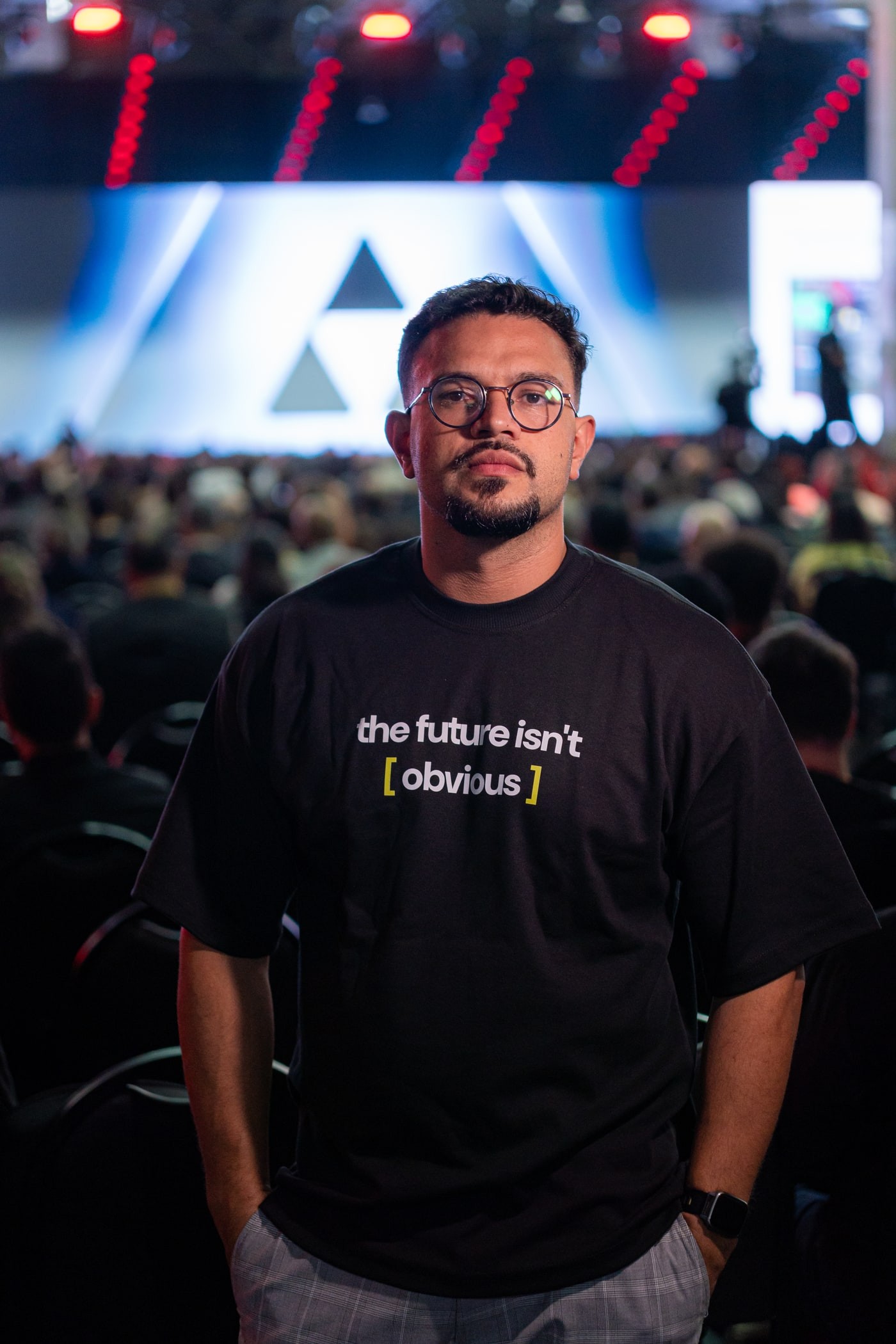
I had dreamed of making the list since I was 19. Between that ambition and recognition in 2021, I had to face a cash crisis, rethink my dream business and learn to assess what I was building.

Almost every week, someone asks me what made me a Forbes Under 30 honoree and what they can do to get there. I have never been able to answer with the certainty the question seems to call for. What I can do is describe the path I took, the decisions that changed it and how much my relationship with that dream evolved.
I was recognized in 2021, in the Technology and Innovation category. It was a very special moment in my life. When I look back at the years before it, though, I also remember a room on the second floor of Cubo, debts I did not know how to pay and the difficulty of accepting the limits of the company I most wanted to succeed.
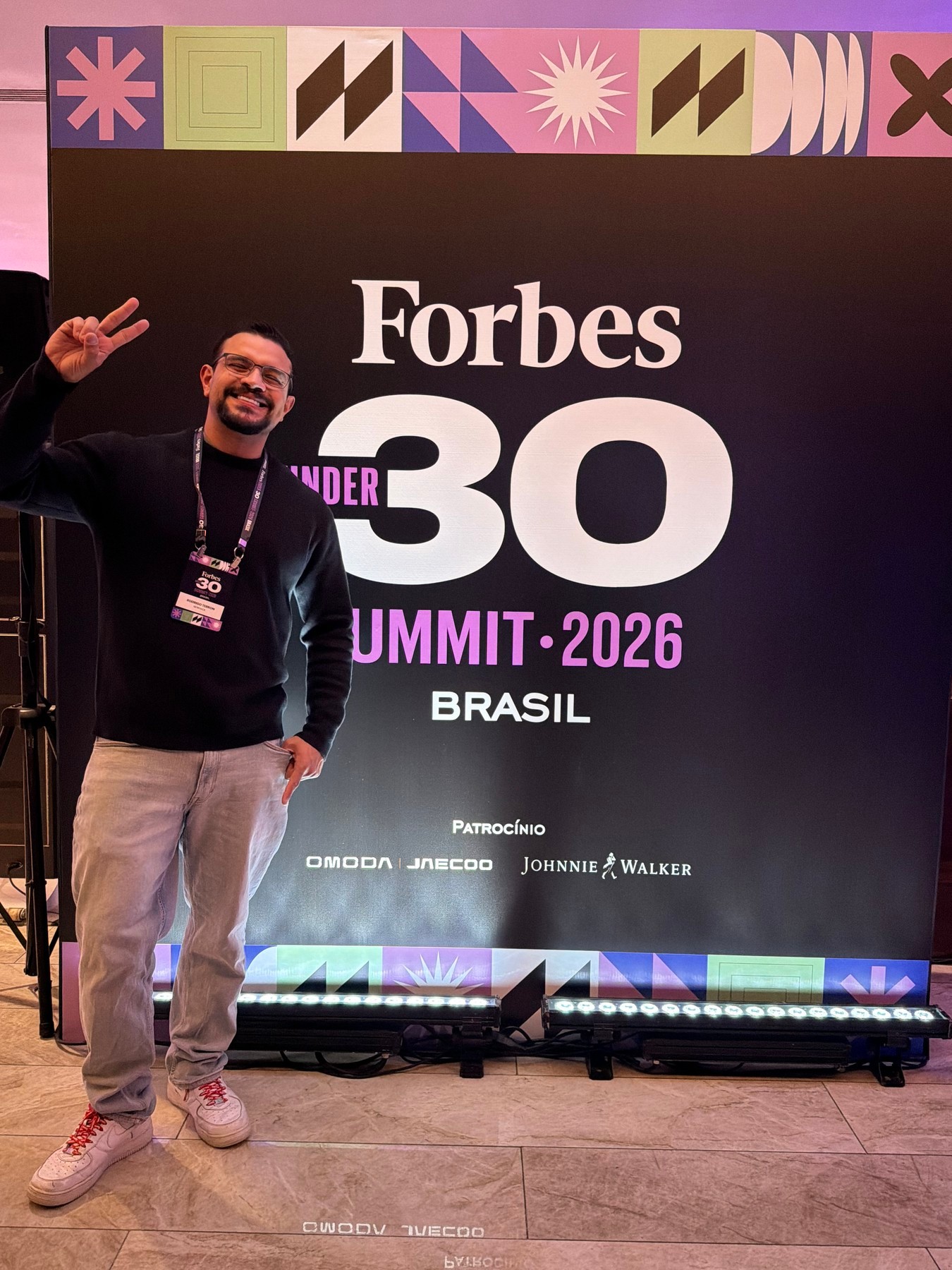
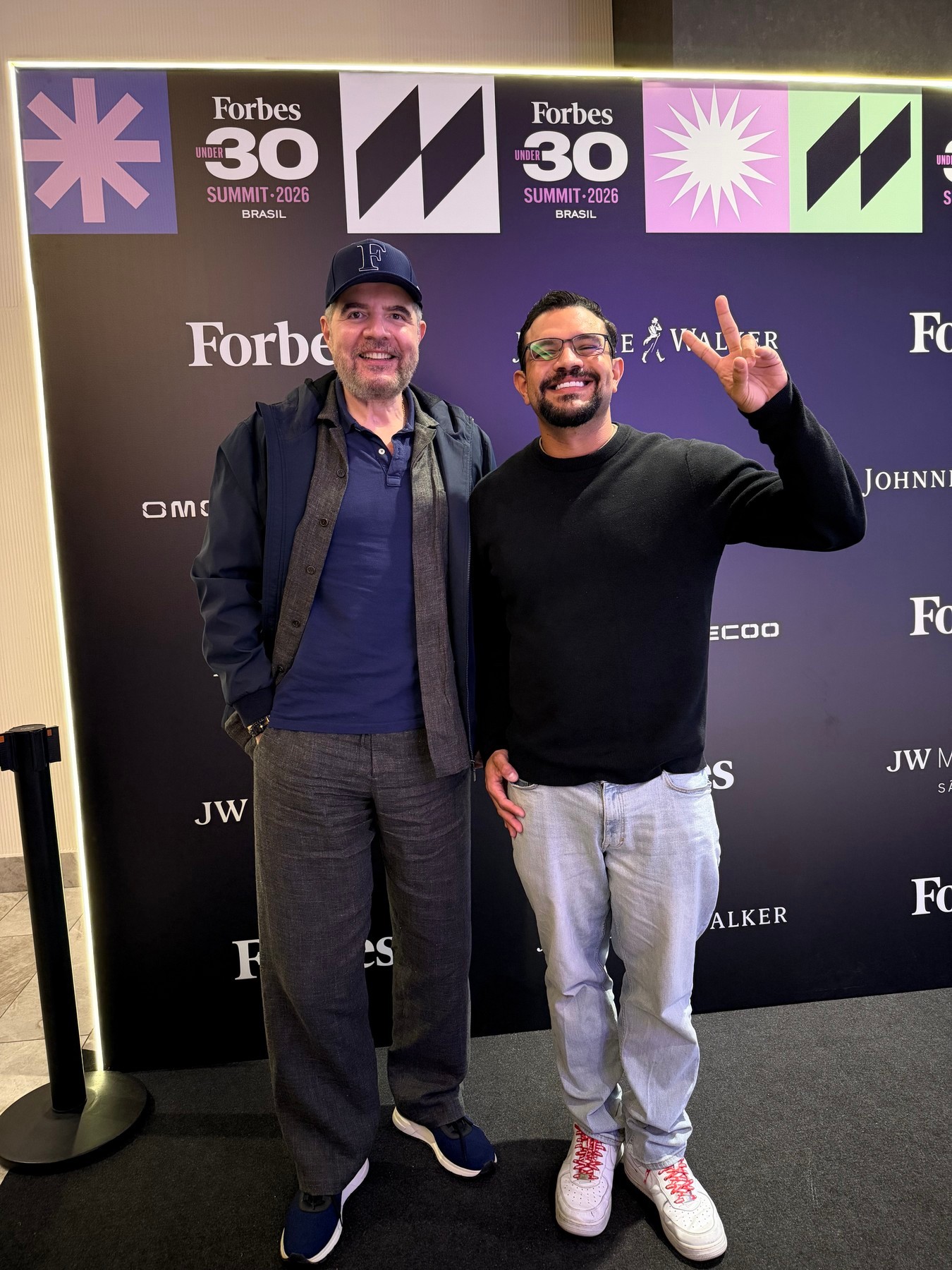
Taking part in the first Brazilian edition of the Forbes Under 30 Summit, on October 29, brought that story back to me. The event brought together people recognized at different times, whose journeys had continued long after the list. I left thinking about the questions people ask me and the care it takes to answer them.
When recognition becomes a measure of your own worth
I discovered Under 30 when I was 19 and made it one of my goals. I admired people who were building meaningful things so early in life. I also wanted to be seen as one of them. At that age, I did not yet know how to separate those two things very well.
Years later, when I was already part of the Cubo community, someone told me they would nominate me. My expectations soared. I had a startup I cared deeply about and could see a promising future for it. Looking back now, I can see that we were still at the beginning and that the reach of our work was small compared with what we could build.
That year, my name did not appear. I now understand that my work still needed to mature. My expectations had led me to anticipate recognition while the company was still demanding answers I did not know how to give.
Over time, I began to see the fine line between wanting your work to be recognized and needing that recognition to believe in your own worth. Making a list can be an important achievement. The risk comes when we start choosing what makes our story look good and give less attention to the work needed to sustain it.
Shawee was growing. Cash was not keeping up
In 2019, I nearly went broke. I lacked the experience to handle Shawee’s growth. We sold projects to large companies, with complex deliverables and costs that had to be paid long before the client’s money came in.
To understand the problem, follow a project over several months. Delivery might be scheduled for April, but payments to suppliers began in February and March, often upfront. Then came the invoice and taxes. Payment from the client might not arrive until June, under lengthy commercial terms that could stretch to 90 days. Obligations were falling due while the revenue from that work was still only a promise of money to come.
With one project, we could manage that gap. With ten running at once, we lost control. Each sale added work and the need to finance its delivery. Growth multiplied a weakness that, at a smaller scale, we had still been able to absorb. Without enough cash or access to credit, the problem snowballed.
At the end of 2019, I sat down with my partners in a room on the second floor of Cubo. I remember saying that even closing the company might not be a simple way out. Either we made it work, or we would carry the debt for years. The conversation carried a very concrete weight: people, suppliers and commitments were tied to what we had built.
Until then, I had looked at growth mainly through what we could sell and deliver. I had to learn to look at the gap between taking on a commitment and having the resources to fulfill it, too. A signed contract would not pay a bill that was due that day. The business model needed to sustain its own operations as they grew.
Making it work also meant bringing a chapter to a close
We began 2020 working hard to reorganize the company. By September, we had paid off much of the debt. The pandemic was an intense period for us, and Shawee grew. That year, we were recognized as Startup of the Year at the Startup Awards.
There was barely time to celebrate. During the week of the awards, I was in Rio do Sul, in Santa Catarina, completing my first merger process. Shawee was merging with Rocketseat, and that decision brought the company’s chapter as I had imagined it to a close.
Shawee was my dream company. Accepting its limits therefore took more than assessing a business opportunity. I had to admit that the model I had created might not allow us to reach the scale I wanted. There was value in what we did, but that ambition called for a different structure.
In 2019, an investor had described the company as a good lifestyle business. I was offended. I heard the comment as a dismissal of everything I was trying to build. Later, I came to understand the assessment better: a business can have clients, deliver value and be good for its partners without having the conditions for growth they imagine.
I find it ironic now: I made Shawee work and ended up seeing the point of the criticism that had bothered me so much. I had managed to turn the company around, but I still needed to find a model that could sustain the scale I wanted. Living through its limits changed the way I understood my own business.
Deciding to merge meant changing the question. What, within that dream, did I really want to preserve? The company’s form, or the possibility of expanding what we could do through it? I had to let go of something I cared deeply about to take part in the next stage.
The journey grew beyond the original plan
At Rocketseat, I found a business model with different conditions for scale. About ten months after the merger, I had the sense that we had made more progress than in the previous two years at Shawee. I could see in practice how the same desire to grow could find different possibilities when the structure of the business changed.
In October 2021 came the sale of Rocketseat to Digital House, a major milestone in my journey. It was an enormous distance from the conversation about debt at Cubo. Between those two moments were work, decisions made with my partners and a willingness to rethink something I had created.
I also began serving as an adviser at Los Grandes, where I became a partner. I entered a complex business connected to a very large gaming community.
By the end of 2021, I was involved with companies, people and decisions that demanded my attention. Under 30 was still a fond memory of an old dream, but that year I did not follow the list the way I once had. I did not ask people to nominate me.
That year, my attention was focused on making those choices work. That was the context in which Forbes contacted me.
An archived message and a magazine in Salvador
Then I received a message from Luiz Gustavo Pacete at Forbes. From our conversation, he had already been following my journey for several years: Shawee, the merger with Rocketseat and the deal with Digital House. He also knew that I had attended public school and started my working life in a call center.
He got in touch about a nomination in the Technology and Innovation category. The message ended up in my WhatsApp archive. I only noticed it after he commented on one of my Stories.
By the time we managed to speak, the list was almost finalized. I thought I might have missed that chance. I got on with my life, still not knowing whether my name would appear in the issue.
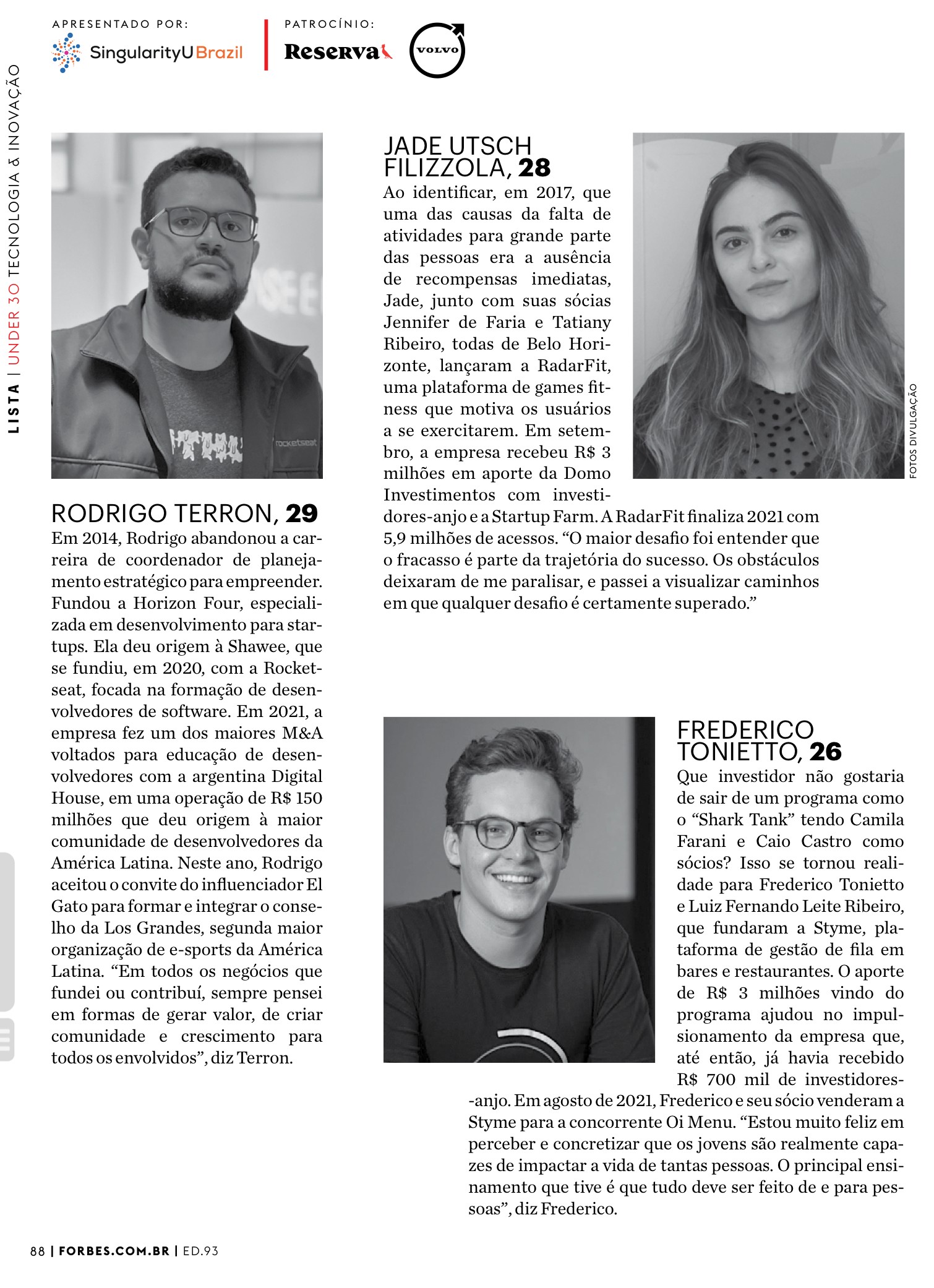
At the end of December 2021, I was in Salvador with my family. On the morning the list came out, I woke up to people tagging me on social media. That was how I learned that the dream I had at 19 had come true. I only managed to buy a copy of the magazine in 2022.
The joy was enormous. Along with it came the memory of everything that could not fit on that page: where I came from, the people who had built with me, the crisis that nearly brought us to an end and the choices I had needed to make to keep going.
What I recognized in the stories at the Summit
At the Summit, I heard stories that made me think about the gap between the public image of an achievement and the experience of getting there. Across several conversations, I recognized challenges, experience built over a lifetime and a very active interest in what each person was doing.
I am speaking about what I observed and what it brought up for me. I do not know of any combination of experiences that guarantees someone a place on the list. Recognition also involves context, opportunity and an editorial decision beyond our control.
Meeting people from different generations of Under 30 helped put the list in perspective. Some had continued growing for many years, built other initiatives and received further recognition. The event made it possible to see their journeys in motion, beyond the moment each name appeared in the magazine.
The work that continues after the list
My work as an investor also includes NG.CASH. The fintech announced a US$10 million seed round in August 2022, months after my recognition as an Under 30 honoree.
Over roughly 12 years, I have been involved in initiatives that grew far beyond what I could imagine at the beginning. At Shawee, that meant approximately 150 hackathons and a reach of more than 100,000 people, in Brazil and other countries. Rocketseat, which I helped build, now has a community of more than 1 million people. At Los Grandes, the community grew to more than 10 million fans.
At NewHack, we have already had an impact on more than 20,000 people through over 100 initiatives in roughly two years. These are different forms of participation and reach, at different points in the journey. Each of these endeavors also belongs to the teams, partners, collaborators and communities themselves.
I see those numbers as one dimension of the work, accompanied by a responsibility: making sure the relationship we have built continues to offer value to those who take part. A community can grow and still need reasons to stay connected. An initiative can reach many people and still require a better understanding of what it delivers. Scale expands the possibility of doing something meaningful, and also increases the obligation to care for what has been built.
The dream remains. What I want to build is bigger
If you have this dream, my suggestion is to keep it and treat recognition as a possible consequence. That changes your relationship with the work: what you are building needs to keep making sense even when your name does not appear on the list. It was precisely in the years when I had to solve harder problems, without knowing whether I would be recognized for it, that my journey took on a different dimension.
Create something you consider meaningful, and allow your view of the world to show in what you do. Bring intensity to pursuing results and impact, along with a willingness to build the knowledge and judgment that ambition requires. In my case, that included learning to finance growth, listening to criticism that offended me and accepting that my dream company needed to change its form.
I remain almost obsessive about results and the possibility of expanding the reach of what we do. I am proud of those achievements and, at the same time, feel there is still much to build. Recognition in 2021 opened a new stage in my story, with greater responsibility for what I would do from that point on.
At 19, I imagined my name on the list. Today, what excites me most is imagining the initiatives I have yet to build and will be proud of many years from now.