How large companies and startups can innovate together
Large companies and startups can find worthwhile opportunities to collaborate. To do so, they need to understand the problem, what each side can offer and how the work will continue after the first meeting. The choice between developing internally, finding a partner or combining both paths depends on that context.
In my experience with hackathons, designing the challenge requires understanding the routine of those facing the difficulty. A presentation may spark interest, but the project needs people who can explain the constraints, assess proposals and take responsibility for the next step. That is where I would start.
Internal innovation and external collaboration can complement each other
An internal team knows systems, customers and decisions that are not always documented. A partner may bring a technology, a specialty or a different understanding of the problem. That complementarity needs to be checked case by case. Company size alone does not guarantee speed, quality or market access.
The OECD's Oslo Manual 2018 includes knowledge flows in its analysis of innovation. This perspective helps us think about what an organization learns, develops and exchanges with others. It is not a rule that every solution should come from outside. Oslo Manual 2018.
Choose the format based on the question you need to answer
Before choosing an event or program, I would put the goal into one sentence. Does the company want to explore a technology, mobilize employees, discover available solutions or test an application? These are different questions, calling for different participants and evaluation criteria.
- An internal hackathon can bring employees from different departments together to investigate problems and develop prototypes using operational knowledge.
- An open challenge can connect developers, researchers or startups, provided the invitation explains the problem and the conditions of participation.
- A solution selection process can identify partners for a defined need. A pilot requires its own scope for testing and monitoring.
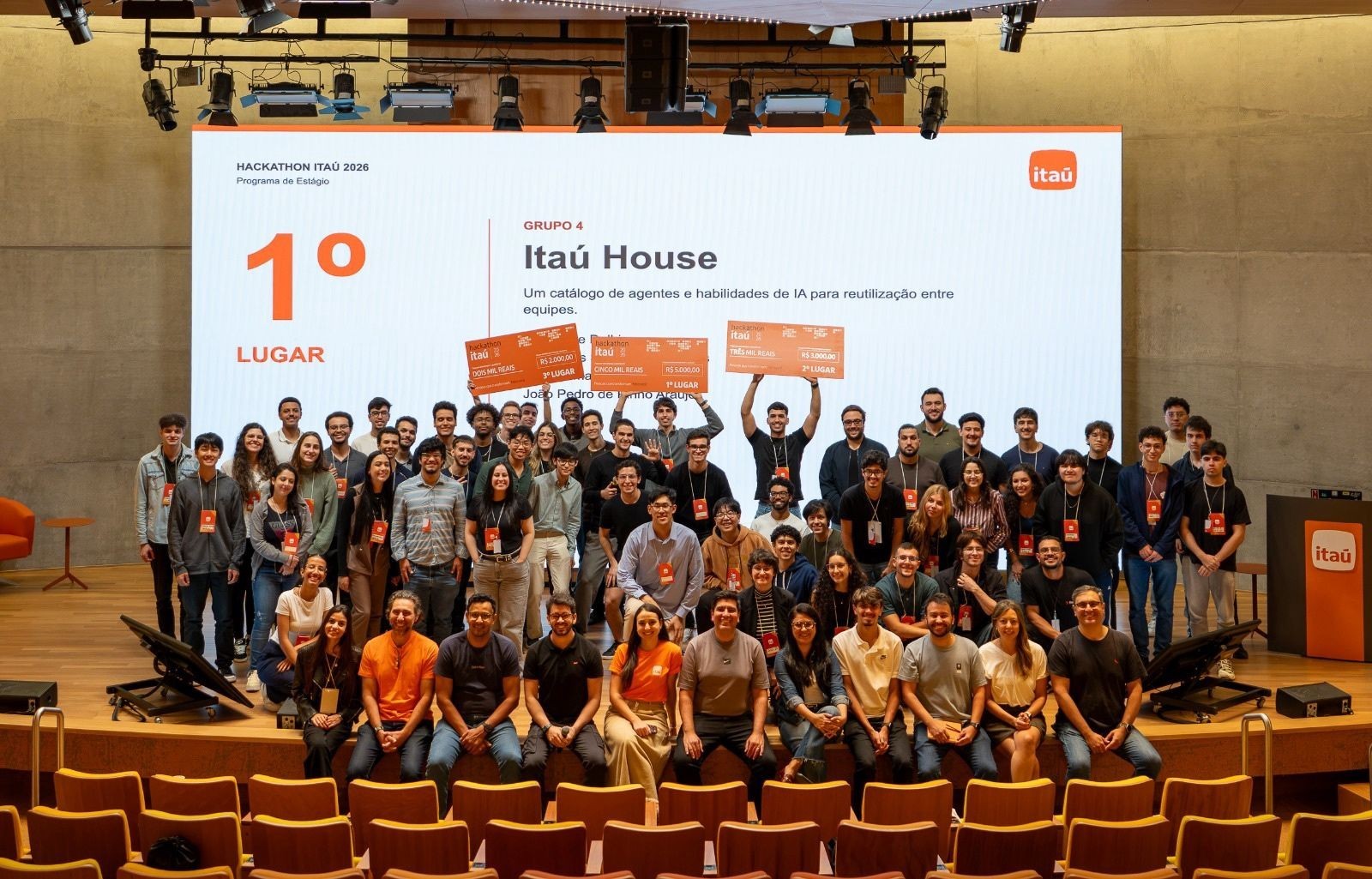
In 2025, NewHack helped build Acelera PRG, Itaú's internal hackathon focused on customer experience. The case involves bank employees and helps distinguish the formats: mobilizing internal teams is a different proposition from seeking external startups. Acelera PRG account.
Agree on the conditions before starting
A startup may have an interesting solution and still struggle to integrate systems or meet the company's requirements. The corporation, in turn, may need approvals and controls. These points should enter the conversation early, with people who can make decisions and timelines both sides understand.
It is necessary to define who knows the process, which data may be used, how the work will be assessed and who handles questions. It is also worth clarifying compensation, intellectual property and the conditions for continuing. An undefined commercial expectation can consume time without producing a useful test for anyone.
The prototype needs a path into operations
A prototype shows a possibility. A pilot needs to check whether it works under defined conditions, with users, authorized data, an owner and an evaluation period. Preparing this transition includes deciding what to do when an answer is wrong, an integration fails or the team needs support.
The criterion may be reducing rework, improving information or making a task simpler. Compare the result with the previous situation and consider the effort required for review, maintenance and adoption. At the end, continuing, adjusting or stopping are all possible decisions. A well-received presentation does not demonstrate implementation or financial return.
In NewHack's corporate innovation work, these questions help guide project design. I want to connect companies, people and knowledge with a concrete reason to work together. The value of that connection needs to show in the quality of the learning and the conditions for taking the next step.