Growth exposes what a company has yet to learn

A first sale tests a proposition. Growth tests the organization that has to keep delivering on it. Two panels at the Forbes Under 30 Summit showed the work involved in moving between those stages.

At the Forbes Under 30 Summit in São Paulo, André Szapiro said he had grown a microcredit business faster than he could sustain the quality of its operations. The business eventually closed. He said he had lacked people who could help him grow through the process. He also connected the push to expand with a period when rapid growth was particularly valued.
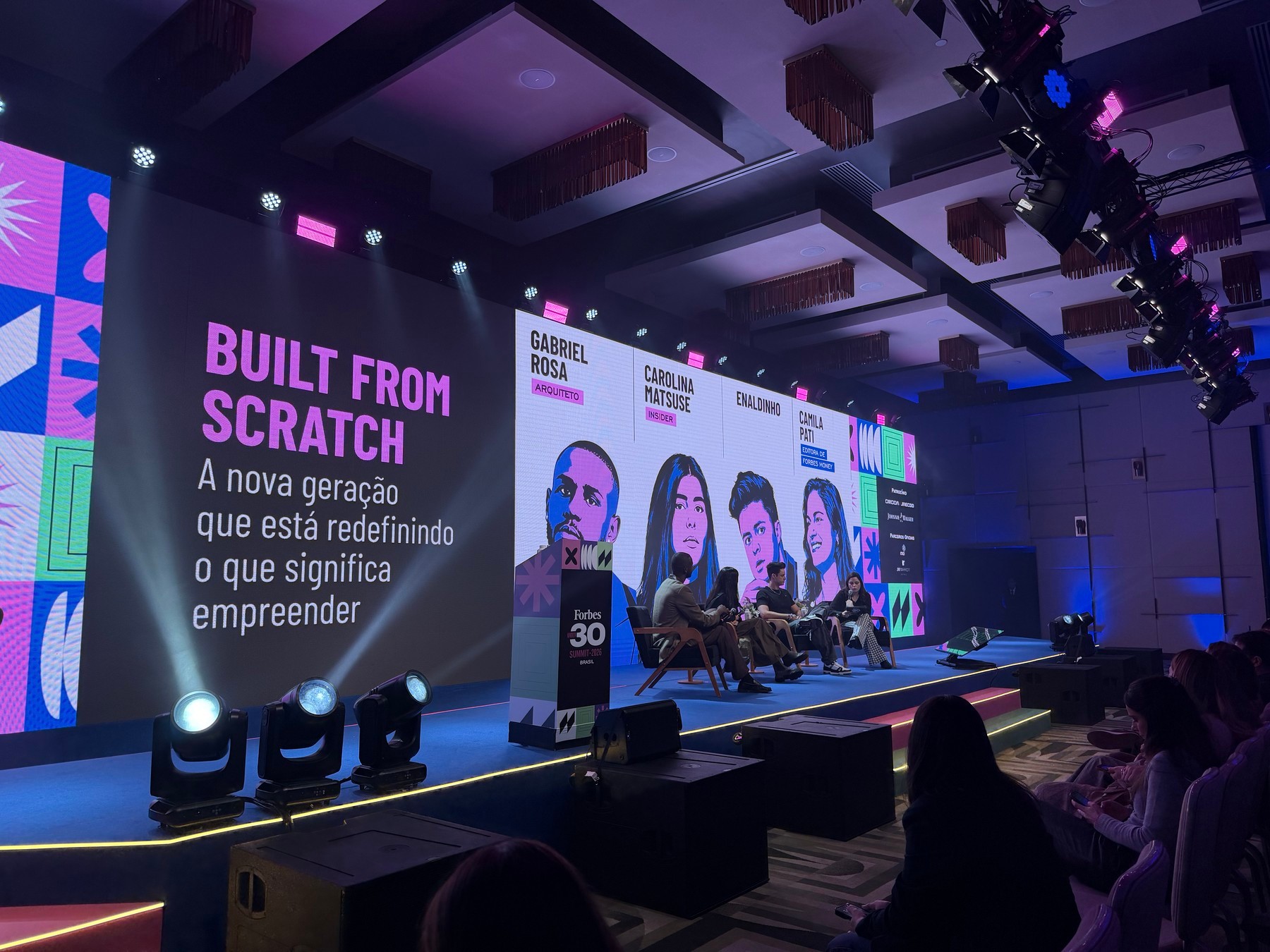
His account stayed with me because finding customers and serving more of them require different capabilities. An offer can make sense to a buyer while still depending on an organization that is learning how to function. That transition is where I see the connection between Building the Next Giants and Built From Scratch, two panels at the event's first Brazilian edition, held on October 29, 2026.
In those conversations, investors, founders and creators showed different parts of that work: turning conviction into a test, following up on what was promised, changing processes and sharing decision-making. Growth changes the significance of early successes. It also magnifies the cost of the things a business still handles ad hoc.
Capital brings a greater responsibility to deliver
In the discussion about Maya Capital, one case involved an entrepreneur the fund had previously turned down, then approached again. He had delivered more than he originally proposed. Following his work revealed progress that the first conversation had not captured. To me, the value of following the work lies in being able to revisit a decision when it provides new information.
Capital makes it possible to hire, expand distribution and bring investments forward. Those choices also increase expenses and commitments. When fundraising ability and the pace of expansion become the most visible signs of progress, the quality of operations can take longer to receive the same attention. That was one of the tensions André's account brought to the conversation.
This applies to both sides of the table. A founder needs to revisit an offer when actual use contradicts the plan; an investor needs to be able to revise an initial judgment. A revised decision remains a bet. Interest from a fund does not remove the need to demonstrate that the business can deliver what it sells.
A test needs to teach us something conviction has not yet established
The Insider story made this discussion concrete. Carolina Matsuse said the founders started with their own capital, a single product and a simple digital operation. The initial proposition was a T-shirt to wear under a dress shirt. A survey drew a negative response, but they believed the product's functionality needed to be experienced to be understood.
They decided to put a batch of the product up for sale on a simple website. According to Carolina, purchases and recommendations followed. Their conviction could now be tested in a setting where someone had to choose the product, pay for it and decide whether it was worth recommending to someone else. The initial bet was limited in scope, allowing them to learn before committing to a larger setup.
That result needed to be read in context. In trying to bring women the same solution that had worked for men, the company encountered different needs. Carolina said entering that segment required rethinking the proposition. Acceptance among one audience provided a reference point, but the new context of use still needed to be understood.
Later, Carolina described a routine of hypotheses, experiments and data analysis. I read this case as three different questions. Does the person understand the proposition? Do they decide to buy? Do they find it useful once they start using it? A response to a description and a purchase provide different kinds of evidence. A recommendation adds a signal about the experience. When the audience changes, as in the attempt to bring the solution to women, the problem needs to be understood anew. The initial result informs the next test, but does not answer every question raised by expansion.
Product identity meets the customer's context
Gabriel Rosa brought this relationship into architecture. In explaining his creative signature, he spoke about the need to understand a client's expectations and the routines of their home. A project has its own design language, and someone will live with the choices made there. The quality of the work depends on that encounter.
To me, the two cases share a criterion: preserving the work's identity while understanding what the customer needs to do with it. The textile technology needs to make itself felt in everyday life. The architect's design language needs to find a place in the lives of the people who will live in the home. When other people begin selling, designing or serving customers, they also need to understand that relationship so they can decide what can change and what should remain.
The structure has to change with the work
Cris Palmaka argued for controls and capabilities suited to the company's stage. Her concern was creating the conditions for growth while preserving a startup's agility. The team that got the idea off the ground may need other kinds of experience to run a larger operation. Recognizing that change is also part of the founder's work.
I think of straightforward situations: a commitment made during a sale needs to reach the people who will carry it out; a change to an order needs to be known before delivery; a recurring problem needs to get back to someone who can address its root cause. When those handoffs depend solely on the founder's memory or intervention, greater volume tends to demand more of their time just to keep the operation running.
A management structure assigns responsibility and gives this work continuity. Its value shows up in information that arrives on time, decisions that can be made with context and the ability to spot a deviation before it happens again. Formal processes need to help solve a real organizational problem, at a scale appropriate to that stage.
Carolina observed that processes that are useful at one stage can become outdated at the next. Paying attention to that is different from simply creating a procedure and then defending it. The way a business operates also needs to be reviewed when its size, audience or proposition changes. A process may have served its purpose and still need to be rebuilt.
Delegating work requires making the criteria clear
Delegation showed both sides of that transition. Gabriel described the effort to stop concentrating the firm's operations in his own hands so he could oversee the whole. At Insider, Carolina highlighted hiring, organizing systems and documenting the culture and the brand's identity. These are ways to let more people work without depending on each approval from the founders.
She also drew attention to the rituals that keep those principles present and to the founders' involvement in the vision, culture and hiring for key positions. The document provides a reference point. Hiring choices, conversations and everyday decisions help show how that reference works in practice.
Enaldinho described an experience that adds an important limit to the pursuit of capacity. During a period of expansion, he began delegating many decisions about the videos and even filmed without knowing the day's content in advance. He reported declining viewership; that period also brought the pandemic and the loss of other revenue streams. In reviewing the structure, he took back part of the creative direction.
In his view, part of what gave the channel its identity still required his involvement. His account helps distinguish increased production from the ability to preserve what makes that work recognizable. A larger team can carry out more tasks while still needing to understand the criteria that guide content choices.
Enaldinho also pointed to the challenge of reducing the brand's dependence on his own image. As I see it, when the creator's involvement is part of the product, the organization needs to build capacity around that contribution. His time should go into decisions where his involvement changes the outcome, with a team capable of handling the rest. Developing that judgment in other people helps build a company that can move forward without making the founder the next approval bottleneck.
That process of building is what interests me most in these two conversations. The market's response changes the product; growth requires other capabilities; the team needs context to make decisions. What convinced the first customer gains strength when it becomes a capability that others can put into practice, evaluate and improve. Between the first sale and a business that can sustain its expansion, there is an entire organization to build.
Article based on the Building the Next Giants and Built From Scratch panels at the Forbes Under 30 Summit 2026.