From diesel to elder care: what found a voice at UNMUTE
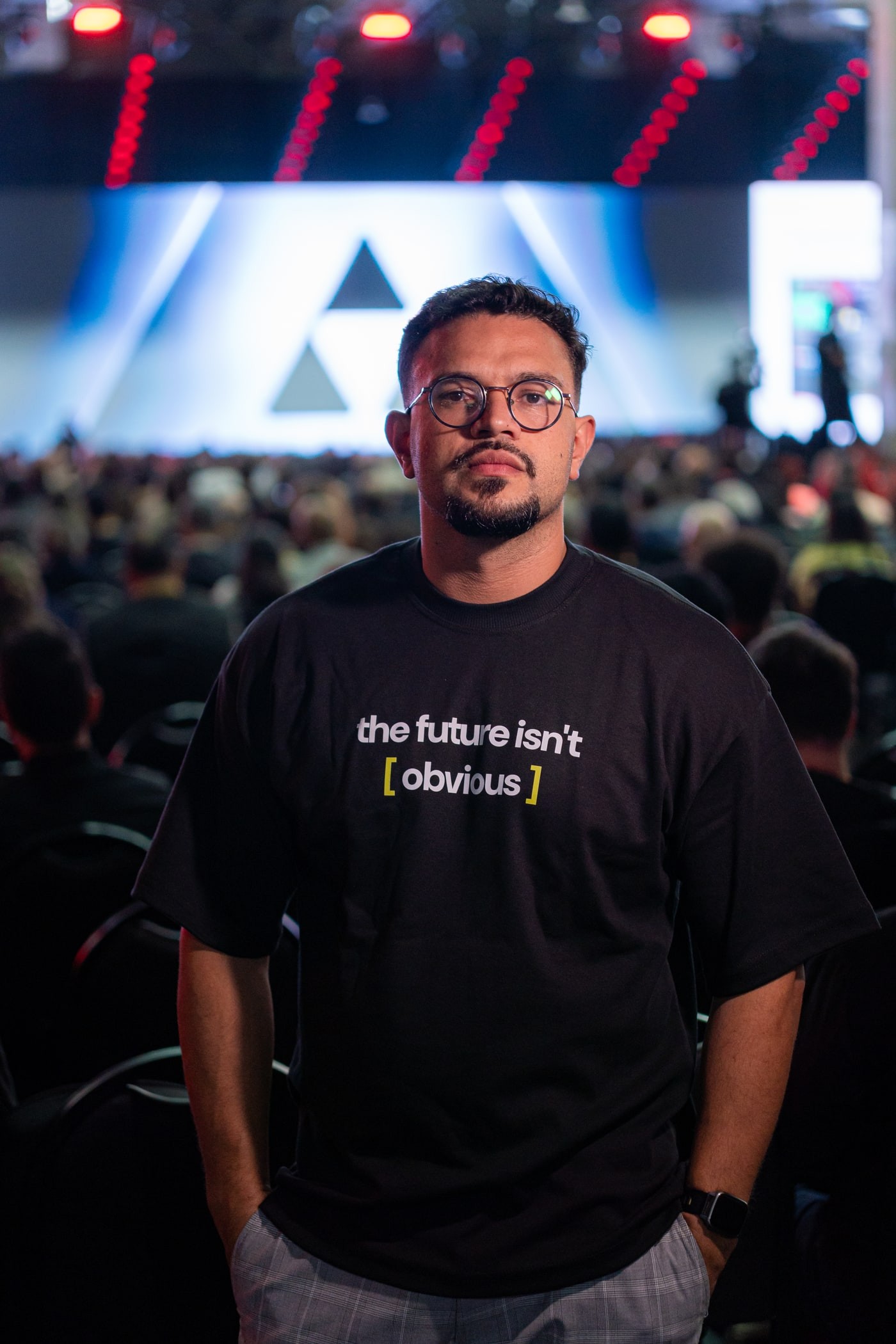
From buying diesel to supporting older adults, 13 teams spent a night turning concrete problems into voice AI prototypes.
Buying diesel for a rural property means contacting suppliers, comparing prices, freight and delivery times, then deciding who to buy from. At UNMUTE, the Desenrola Agro team proposed a voice agent to support that work. In their concept, the producer keeps the final decision while the agent checks and negotiates terms for comparison.
That was one of the directions that emerged from the hackathon's opening question: “If you could give anything a voice, what would it be?”
We held UNMUTE with Agora on November 21 and 22 at AI House Brasil in São Paulo. More than 100 people registered; 50 took part across 13 teams. During the hackathon, 27 mentors supported the teams and five judges evaluated the projects. Integrating Agora technology was a requirement, and development continued overnight amid mentoring sessions and pitch preparation. Read more about the opening of AI House Brasil.
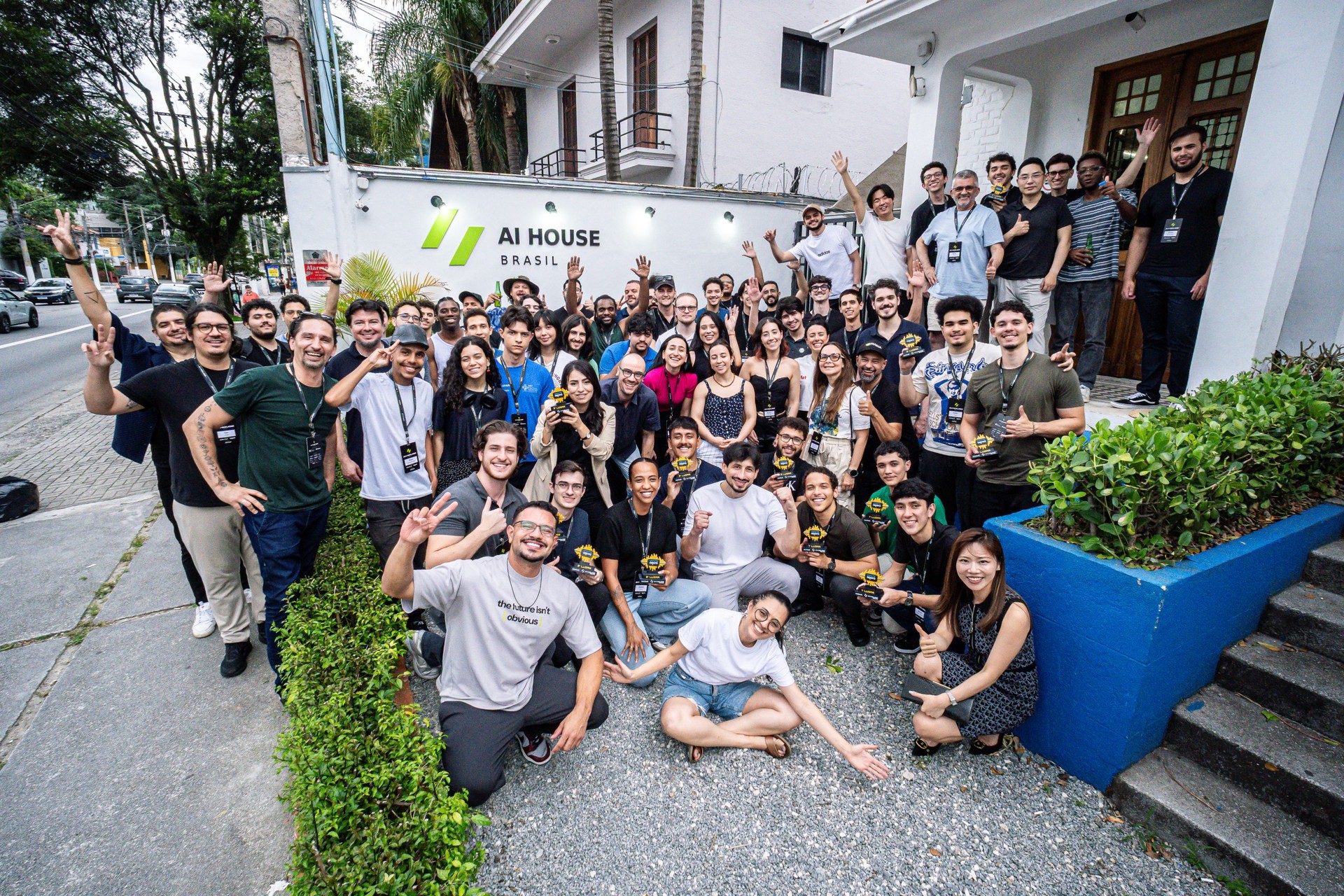
One defining feature was the diversity of people building together. Participants ranged from very young people to those over 60. Women were part of several teams, as were Black and Brown participants, and visitors from African countries and China. Two of the three podium teams included women. This mix of ages, experiences and perspectives helped create an environment for innovation and for looking at problems from different angles.
The event awarded US$3,500: US$2,000 for first place, US$1,000 for second and US$500 for third. UNMUTE was also the first event held at AI House Brasil after its opening. Hackathons are part of the house's essence for us: they bring people together to build, test and learn. We want to hold many more editions, each with its own theme and challenges.
We also welcomed Tony Wang, Agora cofounder and Chief Revenue Officer of the Agora division. Listed on Nasdaq under ticker API, the company reported 4,024 active customers and US$42.1 million in revenue in the third quarter of 2026. Agora's partnership with NewHack and AI House Brasil is part of its recent work to expand its presence and operations in Brazil.
Three projects, three situations for voice to address
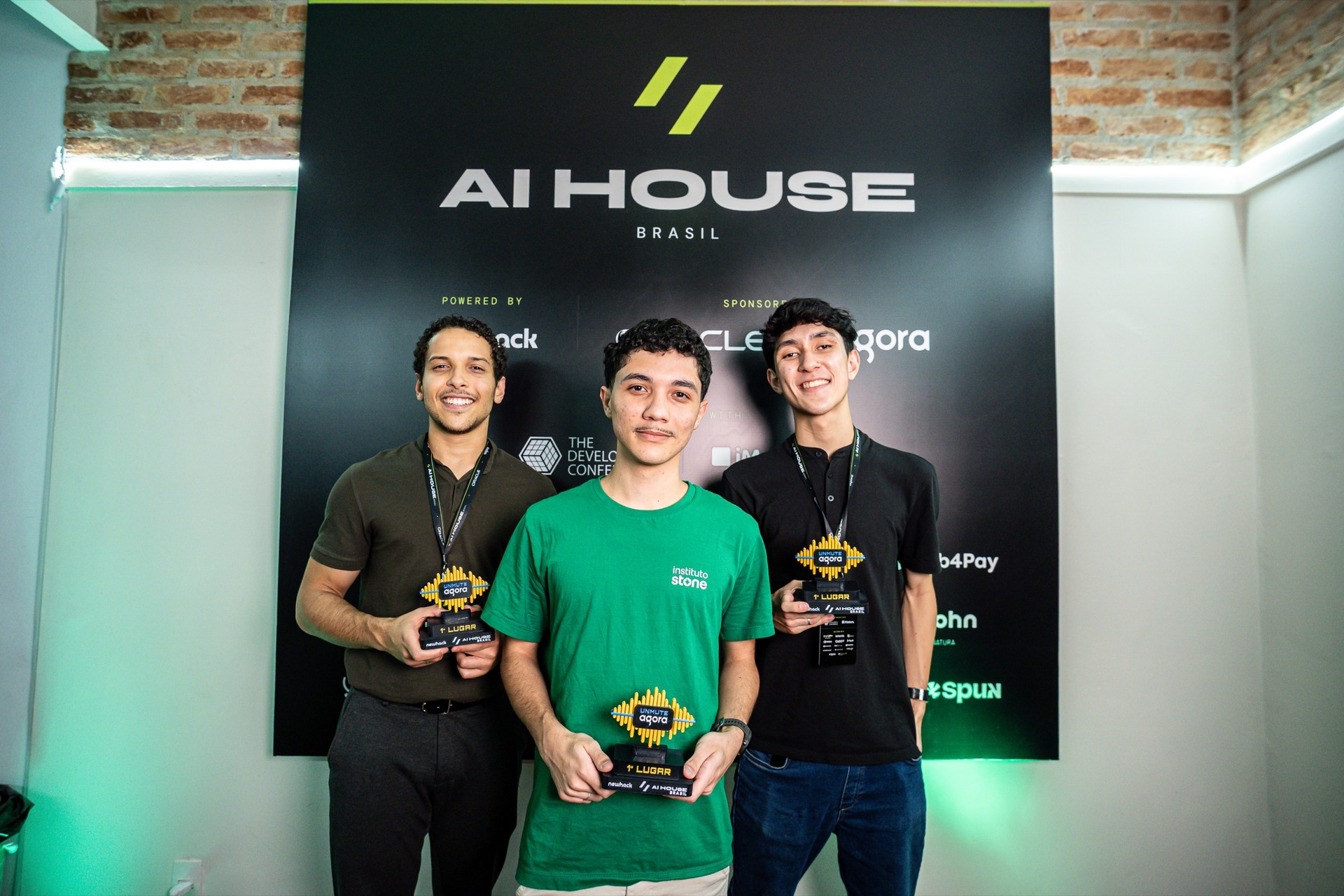
First place went to Desenrola Agro, from LDE group: Leunam Sousa de Jesus, Davi Duarte Rodrigues and Eduardo Hirohito Izawa Maciel. The concept starts with grain producers in Mato Grosso buying diesel. It is a specific situation that helps make the product clear. There are suppliers to contact, commercial terms to compare and a decision that needs to be clear to the person paying.
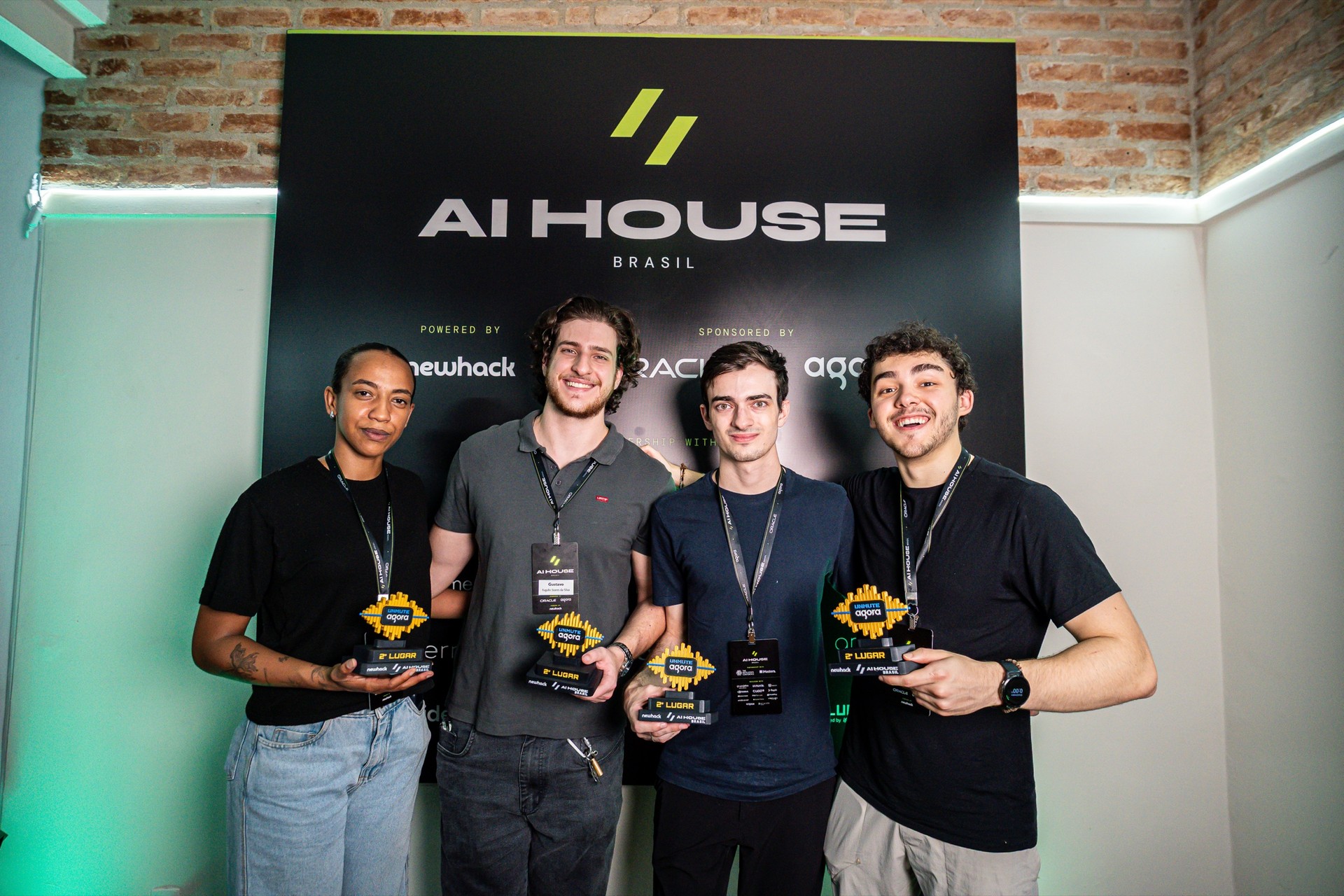
Second place went to Dona Leda, from 21M Dashboard: Victor Ciampi, Sthefani, Gustavo Fugulin Soares da Silva and Breno. The project proposes daily conversations with independent older adults, with summaries for family members, alerts and the option for a family member to join the same call. The interface challenge changes here. The conversation needs to work for the older adult, and the information shared with family needs to preserve the context of that interaction.
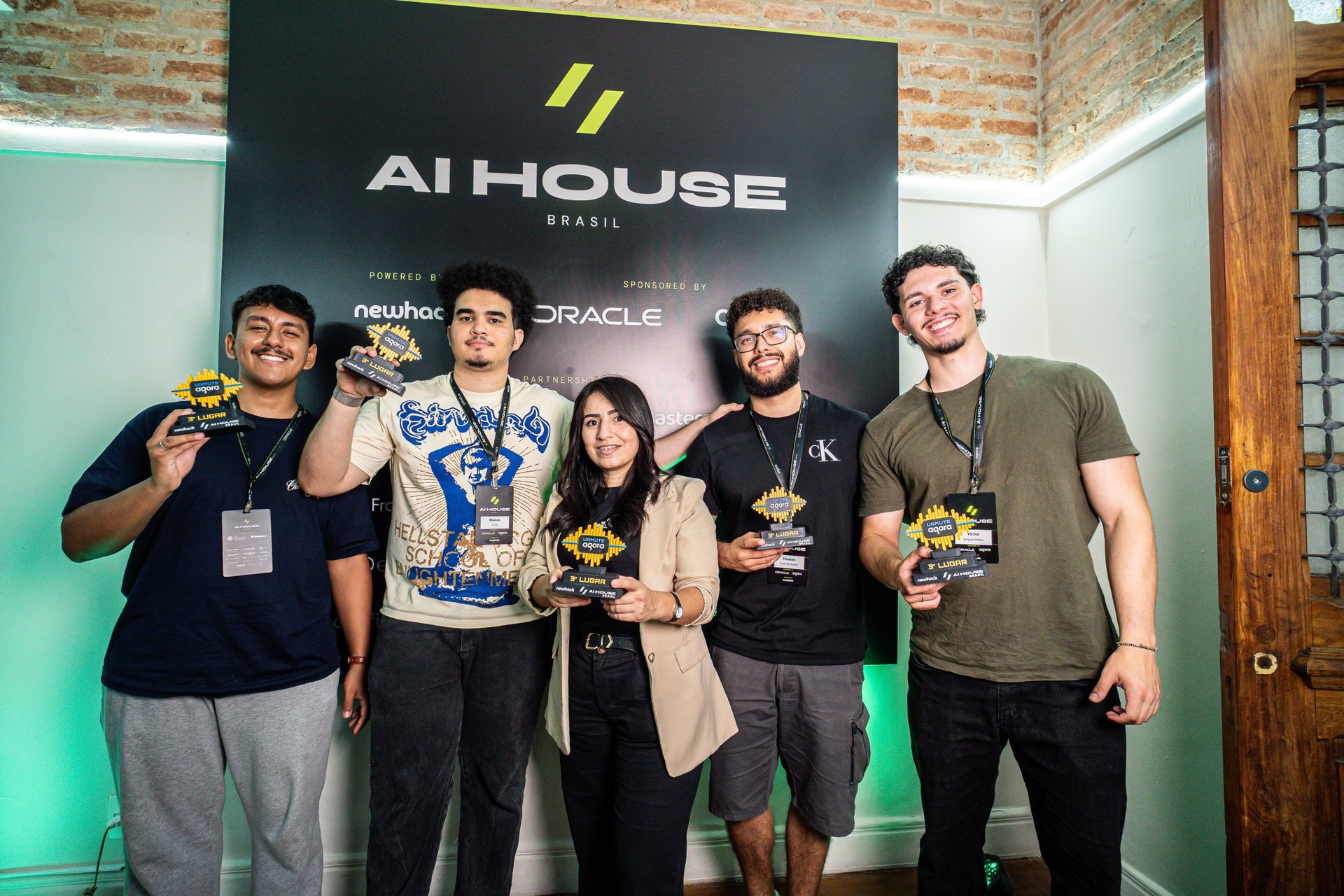
Third place went to Vyra, from Hablantes: Kamilla Raffaela, Hudson Inacio De Oliveira, Kleiton Souza, Thiago de Almeida Penaloza and Victor Sampaio Pereira. It is a voice copilot for industrial diagnostics. The concept brings together history, data and manuals to support an investigation. The prototype was presented with a simulator. The next test needs to bring this interaction closer to the conditions in which someone actually seeks help diagnosing a machine.
I like these examples because they make it possible to discuss what to test next. In agriculture, how can the producer compare purchase terms? In elder care, what can a conversation help us understand? In industry, what information helps investigate a failure?
Mentoring needs to carry forward what has changed
Other teams explored sales training, languages, tutoring for children, logistics, pharmacovigilance, security, care coordination, war rooms and professional simulations for recruiting. Each task calls for a specific understanding of who will talk and what needs to happen next.
Mentoring-round notes were shared to support continuity. That detail matters to me. Anyone joining a team to help should be able to understand what has already been discussed and which question remains open. That lets the next conversation move a decision forward.
The judging panel brought together Tiago Salles, Josi Assis, Guilherme Rodz, Gustavo Machado and Daniel Lima. There were 65 evaluations, five per team. The podium recognizes the work presented in this context. A pitch is a starting point for putting prototypes in front of users and observing what happens.
Amélia put the conversation to the test too
We brought this experimentation into the event itself with Amélia, an interactive voice and avatar character built using Agora, ElevenLabs and LemonSlice. The interaction had technical setbacks.
It is a concrete example of the work involved in building a voice experience. People need to know when they can speak, be able to interrupt and receive an answer that accounts for what they just said. If a conversation loses context or takes too long, the experience becomes difficult even when each technology works on its own.
Anyone building this kind of product needs to evaluate the whole interaction. Response time, turn-taking and recovery after an error are all part of the experience users judge.
The next test happens in use
The projects still have questions to answer. How does a producer compare a negotiation handled by an agent? What does a family understand from Dona Leda's summary? What changes for Vyra when we move beyond a simulator?
This is the follow-through I want to build with AI House: bring teams closer to people who understand the problem, organize new conversations and create the conditions to test. The weekend gave shape to 13 proposals. Now each team has an early version it can take to the people it hopes to serve.